Straight answers to the fence questions people actually ask
Every question below is one we get asked on real job walks across our ten-county area, or one people search for by the thousand. Each has a short answer here and a full one behind the link — with the ordinance or the code section cited where the law is involved, so you can check it yourself.
31 questions · answered by a licensed Tennessee contractor working here since 1973.
- Cost & pricing
- Rules, permits & property lines
- Choosing a material
- Pools & safety
- Installation & timing
- Hiring a contractor
- Commercial & farm
Cost & pricing
How much does a fence cost in Knoxville, TN?
Price is driven by linear footage, material, terrain and gates — not a flat per-foot number. A short, flat, straight run of chain link and a long, rolling run of board-on-board cedar with two drive gates are different projects. The full answer breaks the estimate into the parts you can actually control.
Read the full answer →What is the most affordable fence option?
Chain link is normally the lowest installed cost per foot, with welded-wire and field fence close behind on acreage. But the cheapest fence to install is not always the cheapest to own — the full answer compares up-front cost against expected service life in East Tennessee weather.
Read the full answer →What actually drives the price of a fence?
Six things move a fence quote more than anything else: total linear feet, material grade, post depth and spacing, slope and rock, number and width of gates, and demolition of an existing fence. The full answer explains how each one shows up on a real estimate.
Read the full answer →Why don’t you give fence estimates over the phone?
Because the two things that decide the price — what the ground is doing and where the line actually runs — cannot be seen from a phone call. Rock, slope, buried utilities and an unclear property line all change the number. The full answer explains what a site visit checks.
Read the full answer →Rules, permits & property lines
Do I need a permit to build a fence in Knoxville?
It depends on which jurisdiction you are in. The City of Knoxville, the Town of Farragut and unincorporated Knox County each handle fence permits differently, and an HOA can impose stricter rules than any of them. The full answer walks through who to call for your address.
Read the full answer →Does my HOA have to approve my fence in Knox County?
Almost certainly yes, and your HOA is not bound by the city or county rules you just looked up. Tennessee has no state law governing HOA architectural review for single-family subdivisions — Title 66, Chapter 27, Part 7 covers voting records, leasing rights and assessments, and says nothing about fences. The authority comes from your recorded covenants, which can be stricter than any government rule. The full answer covers the order to get approvals in.
Read the full answer →How tall can a fence be in Knoxville?
Height limits change depending on where the fence sits on the lot. Under the City of Knoxville Zoning Code, Article 10, § 10.3(L), privacy fences forward of the front building line are limited to 42 inches. Rear and side yards are treated differently. The full answer covers each case with the code cited.
Read the full answer →What are the fence rules in Knox County?
Unincorporated Knox County is governed by its own zoning ordinance, which is not the same as the City of Knoxville’s. Front-yard fences are limited to 3½ feet under § 3.20.04.B. The full answer separates county rules from city rules so you are reading the right one for your address.
Read the full answer →How do fence rules differ between Knoxville, Oak Ridge and Maryville?
Every jurisdiction here writes its own rule, and several of the numbers repeated online are wrong. Knoxville limits privacy fences to 42 inches in the front yard and does not cap them at all in back; unincorporated Knox County exempts fences from building permit; Oak Ridge requires a Zoning Compliance Permit. The full answer puts six jurisdictions side by side with the ordinance section cited.
Read the full answer →How far off the property line can a fence be?
Tennessee does not set one statewide setback for residential fences — it is decided locally, and by where your surveyed line actually is. Building on or near the line has consequences for maintenance access and ownership. The full answer explains the practical placement decision.
Read the full answer →What is Tennessee’s 7-year fence law?
Tennessee statute addresses long-standing division fences and how a boundary that has been treated as the line for years can be established. It is one of the most searched fence questions in the state and one of the most misunderstood. The full answer explains what the statute does and does not do.
Read the full answer →Can my neighbor attach their fence to mine?
Not automatically. A fence you paid for and that sits on your side of the line is your property, and attaching to it without agreement raises both liability and maintenance questions. The full answer covers shared fences, division fences and how to handle the conversation.
Read the full answer →Who pays for a fence between neighbors in Tennessee?
Under Tennessee Code Annotated § 44-8-202 your neighbor generally owes nothing toward a fence you build on your own — the obligation is triggered when they join to it or use it as their own boundary fence. The full answer covers the statute, the three-freeholder remedy for disputes, and why a written agreement beats relying on either.
Read the full answer →Do you have to call 811 before digging fence posts in Tennessee?
Tennessee’s excavation statute does contain a fence-post exemption, and on a normal subdivision lot it almost never applies — it only covers digging outside a recorded easement and more than 100 feet from the pavement edge. The full answer explains the notice period, the tolerance zone, and who is responsible for making the call.
Read the full answer →Choosing a material
Wood or vinyl — which is better in East Tennessee?
Wood costs less up front and can be stained to match anything; vinyl costs more up front and asks almost nothing of you afterward. Humidity, shade and clay soil all push that decision one way or the other here. The full answer compares them on cost, upkeep and lifespan.
Read the full answer →What is the best fence for privacy?
Board-on-board and shadow-box wood both close the gaps that a standard picket leaves, and vinyl privacy panels do it with no maintenance. Height limits in your jurisdiction may cap what you can build. The full answer walks through the privacy styles and where each one fits.
Read the full answer →Is aluminum fencing worth it?
Aluminum will not rust, holds powder coat for years, and suits sloped ground because the panels can be racked. It gives you a defined boundary without blocking a view. The full answer covers where aluminum earns its price and where another material makes more sense.
Read the full answer →How long does a fence last in East Tennessee?
Service life depends far more on what happens below grade than above it — post depth, concrete, drainage and soil contact. Our humidity and freeze-thaw cycles are hard on poorly set posts. The full answer gives realistic ranges by material and explains what shortens them.
Read the full answer →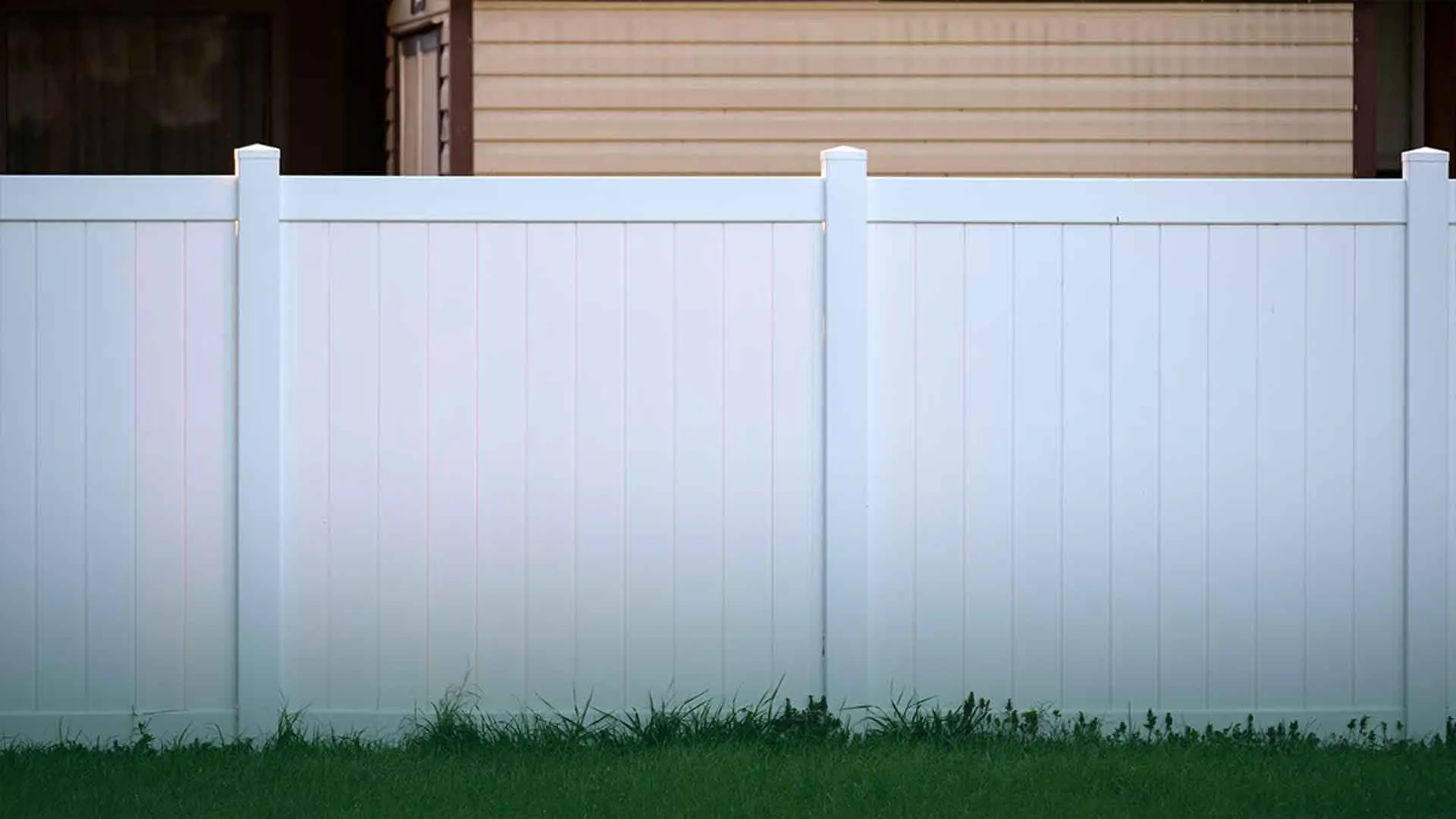
Pools & safety
What kind of fence is required around a pool?
Pool barriers are a safety-code matter, not a style choice — there are rules covering barrier height, how far apart the verticals can be, ground clearance, and how the gate must latch and swing. Getting any one of them wrong can fail an inspection. The full answer sets out the requirements.
Read the full answer →Installation & timing
How long does fence installation take?
Most residential fences are installed in one to three days once work begins, but the calendar time from signature to finished fence is longer — utility locates, material lead time and weather all sit in between. The full answer breaks down the real timeline stage by stage.
Read the full answer →When is the best time of year to install a fence?
Fences go in year-round in East Tennessee, but spring books out fastest and winter often has the shortest wait. Ground conditions matter more than temperature. The full answer explains the trade-offs of each season and when to get on the schedule.
Read the full answer →Why is it so hard to dig fence post holes in Knoxville?
Because of what is under the grass. On Montevallo soils bedrock can sit 7 to 20 inches down, the subsoil across much of the county runs 35 to 60 percent clay, and the adopted frost line is only 12 inches — so wind load and clay movement, not frost, decide how deep a post goes here. The full answer explains what happens when a crew hits rock and what it does to a quote.
Read the full answer →Should I build my own fence?
A DIY fence is realistic on flat, clear, rock-free ground with a well-marked property line. The costs that surprise people are post depth, gate sag, slope, and utility locates. The full answer is an honest look at where DIY fence projects go wrong.
Read the full answer →How do I plan a fence layout?
Start from the surveyed line, then work out gate positions around how you actually move — mower, trailer, trash cans, dogs. Corners and slope changes decide post placement. The full answer is a step-by-step approach to laying out a run before anyone digs.
Read the full answer →Should I repair my fence or replace it?
If the posts are sound and the damage is in the pickets or rails, repair is usually the right call. Once posts are rotting or leaning along a whole run, repairs stop being economical. The full answer gives you the test to tell which situation you are in.
Read the full answer →Does homeowners insurance cover a fence damaged in a storm?
Usually, when wind or a falling tree did the damage — but under “other structures,” typically capped around 10% of your dwelling limit, with your deductible and often depreciation applied. It does not matter whose tree it was: you file with your own insurer. Flood and rot are excluded. The full answer shows when a claim is not worth filing, and how Knox County’s Home Improvement license rule helps you screen out storm chasers.
Read the full answer →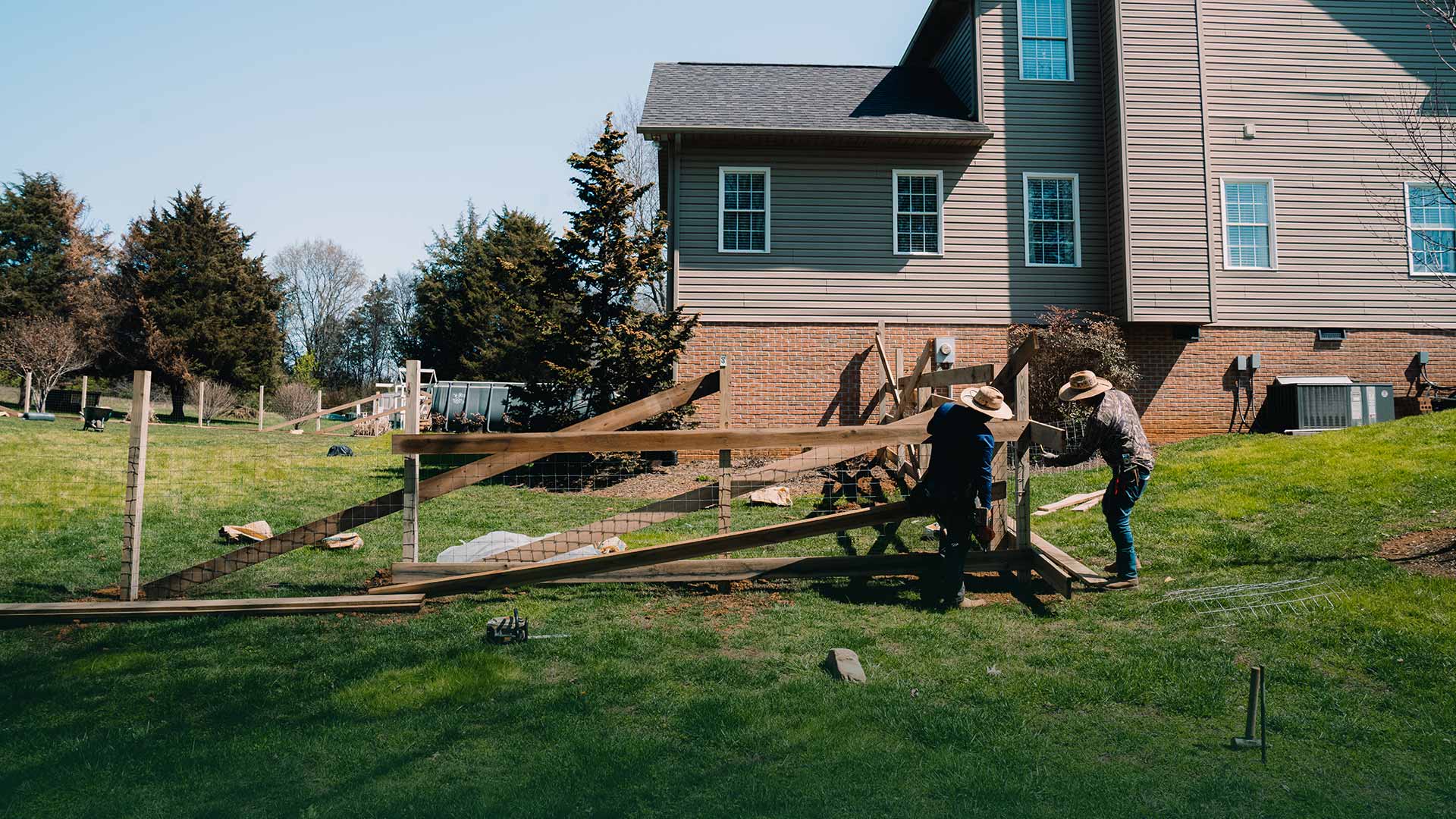
Hiring a contractor
How do I verify a fence contractor’s license in Tennessee?
Tennessee licenses contractors through the state Board for Licensing Contractors, and the license can be looked up by name or number before you sign anything. Loudon County Fence holds TN Unlimited Contractor License #54371. The full answer shows you how to run the check yourself.
Read the full answer →What should I look for in a fence company?
Licensing, insurance, a written scope, a real warranty, and someone who walks the line with you before quoting. The full answer lists the questions worth asking before a deposit changes hands — and the answers that should give you pause.
Read the full answer →Commercial & farm
What should I consider when choosing a commercial fence contractor?
Commercial work adds bonding, insurance limits, code compliance, scheduling around an operating site, and access control. Loudon County Fence is a registered federal contractor and has worked on DOE and utility sites in Oak Ridge. The full answer covers what to evaluate before awarding the work.
Read the full answer →What counts as a lawful fence in Tennessee?
The state defines it in statute, down to wire gauge and spacing. Under Tenn. Code Ann. § 44-8-102 a lawful wire fence is nine horizontal wires — No. 9 top and bottom, No. 11 between — spaced 3½, 3½, 4, 4, 6, 8, 10 and 10 inches up from the ground, on posts one rod apart. Tennessee is also a fence-in state: § 44-8-401 makes it a Class C misdemeanor to willfully let livestock run at large. The full answer covers every qualifying construction, and why the legal minimum is rarely the right fence for horses.
Read the full answer →What fencing works best for East Tennessee farms and acreage?
Livestock type decides the fence: field fence and woven wire for cattle, board or no-climb for horses, high-tensile for long perimeter runs. Terrain and water crossings drive the rest. The full answer covers the farm fencing types used across our ten-county area.
Read the full answer →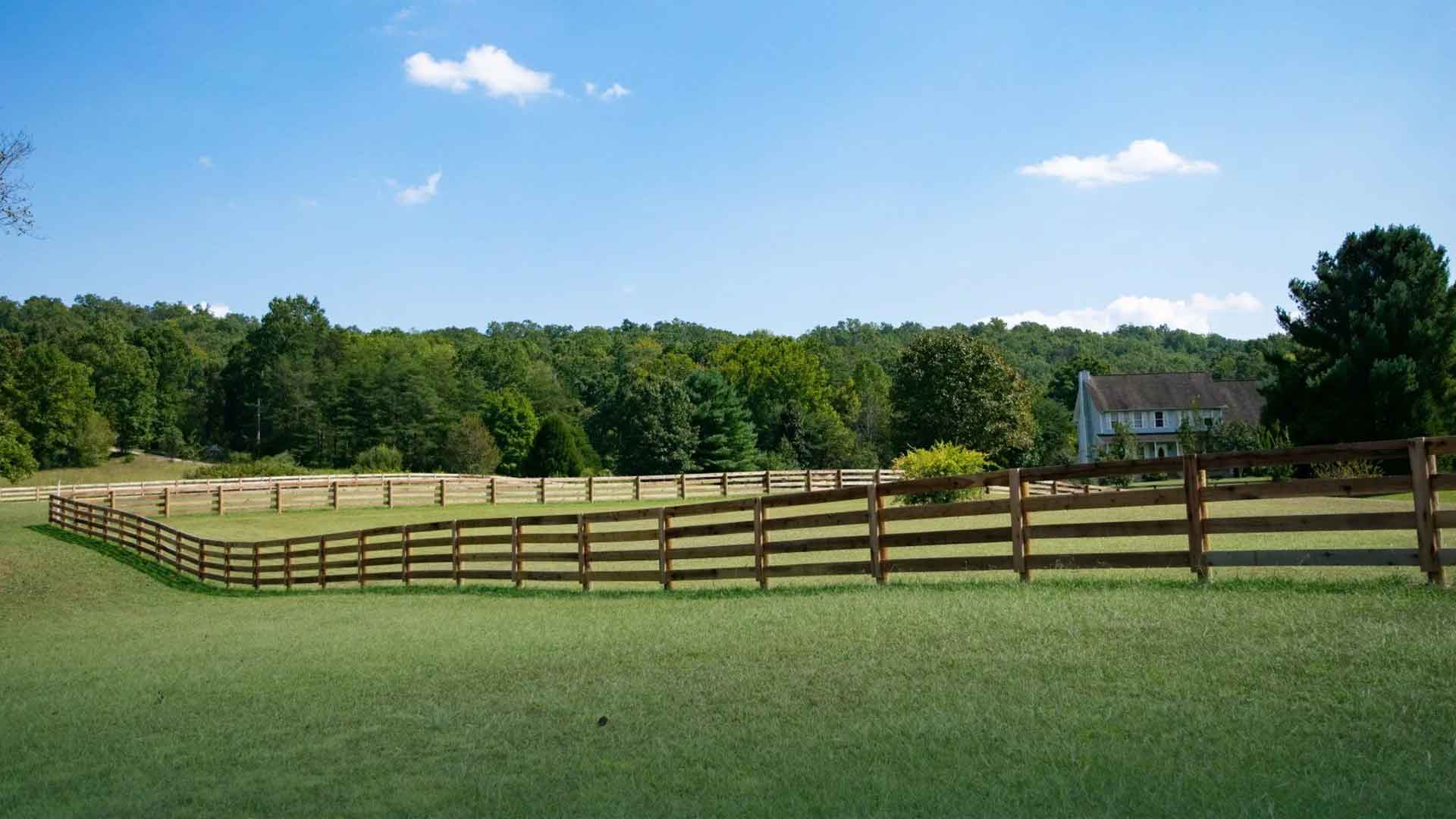
Still not sure what applies to your property?Rules change street to street in East Tennessee, and the only way to be certain is to look at your actual line. We will walk it with you and put the answer in writing.
Get a free quoteLoudon County Fence, LLC · 5482 Hwy 321 N, Lenoir City, TN 37771 · (865) 988-9935 · TN Unlimited Contractor License #54371. Code references are quoted from the governing ordinance and linked on the full answer pages. Ordinances change — confirm with your local codes office before you build.
FREE FENCE QUOTES
Ready to take the first step towards securing your property and enhancing its curb appeal? Requesting a quote on fencing from LC Fence is simple.
[ Quotes Provided Within 24 Hours of Appointment 👍🏼 ]
More Answers, In Full
Complete answers to the questions we get asked that nobody local seems to write down.
Is barbed wire legal inside Knoxville city limits?
We read Article 10 of the Knoxville Zoning Code in full, and it contains no provision addressing barbed wire, razor wire or electrified fence — there is no fence-material prohibition in the zoning article at all. Knox County's zoning ordinance is likewise silent on it. That is not the same as a green light for a residential street: an HOA can prohibit it outright, and other bodies of law govern how a barrier can be built where the public may come into contact with it. If you are considering barbed wire on a suburban lot, call the City at (865) 215-4311 for your specific address and zone before buying material.
Can I build a fence over a utility easement?
You can, but you do it at your own risk, and this catches people out badly. An easement gives the utility a permanent right of access, and you may not do anything that blocks that access or endangers their facilities. If they need to dig, the fence comes out — typically at your cost to reinstate, not theirs. Farragut states the consequence plainly: fences must not be placed in utility, drainage or construction easements, and fences placed there may be removed. The practical solution is a removable panel or a gate section where the fence must cross. One crucial distinction: 811 marks buried facilities, not easements — your easements are on the recorded plat.
Does a fence contractor have to be licensed in Tennessee?
Tennessee licenses contractors through the Board for Licensing Contractors, and licences carry monetary limits that cap the project size a contractor may legally undertake. LC Fence holds a Tennessee Unlimited Contractor License, number 54371 — “unlimited” meaning no dollar cap. The state's licence lookup is public, and we would encourage you to check it for us and for anyone else you are considering. Ask any bidder for their licence number and confirm it covers the size of your job.
How much of a deposit is normal for a fence?
A deposit is normal and reasonable — fence material is ordered specifically for your job and paid for before a crew ever arrives. What should concern you is a demand for the full amount up front, or pressure to pay cash with no written contract. You should receive a written agreement stating the material, the linear footage, gate count and locations, who is responsible for locating the property line, and what happens if rock is encountered. If a bidder will not put the scope in writing, that is your answer about how the rest of the job will go.
When is the best time of year to install a fence in East Tennessee?
Fence goes in year-round here — our winters rarely freeze the ground hard enough to stop work, and Knox County's footing depth requirement is only about 12 inches, far shallower than northern climates. Late autumn through winter is genuinely the best time to book: the schedule is shorter than the spring rush, the ground is firm rather than saturated, and leaf-off makes a wooded fence line far easier to walk and clear. The worst time is right after a wet spell, when heavy equipment will tear up a yard.
How long does a fence installation take?
A typical residential yard is one to three days on site once we start, and the lead time before that is usually the longer part — driven by material orders and the queue. Add time for rock, long runs, steep ground, or automated gates that need power trenched to them. Some fences are set in two visits: posts and concrete first, then panels and gates once the footings have cured, which produces a straighter, longer-lasting fence than hanging everything wet.
Will my HOA approve the fence I want?
Your HOA covenants can be — and in West Knox subdivisions frequently are — stricter than the City or County code, and they are private contracts, so the municipality will not help you enforce or escape them. Many Knox County subdivisions specify material, colour, maximum height and sometimes that black aluminum is the only permitted option. Get written architectural approval before we order material, not after. We are glad to provide a drawing, specification and product data for your submission, and we build to whatever your covenants require.
Do I need a Certificate of Appropriateness in a historic district?
Possibly, and the honest answer is that it is genuinely unsettled on paper. Knoxville's historic overlay requires a Certificate of Appropriateness for construction or alteration of any structure, and a fence is a structure under the code's own definitions — while the adopted district design guidelines suggest fences may fall outside review where no building permit is triggered. Those two readings do not fully agree. If you are in Old North Knoxville, Fourth & Gill, Edgewood Park or any H-1 overlay, confirm with Knoxville-Knox County Planning's historic preservation staff before ordering material. We would rather you make one phone call than take a fence back down.