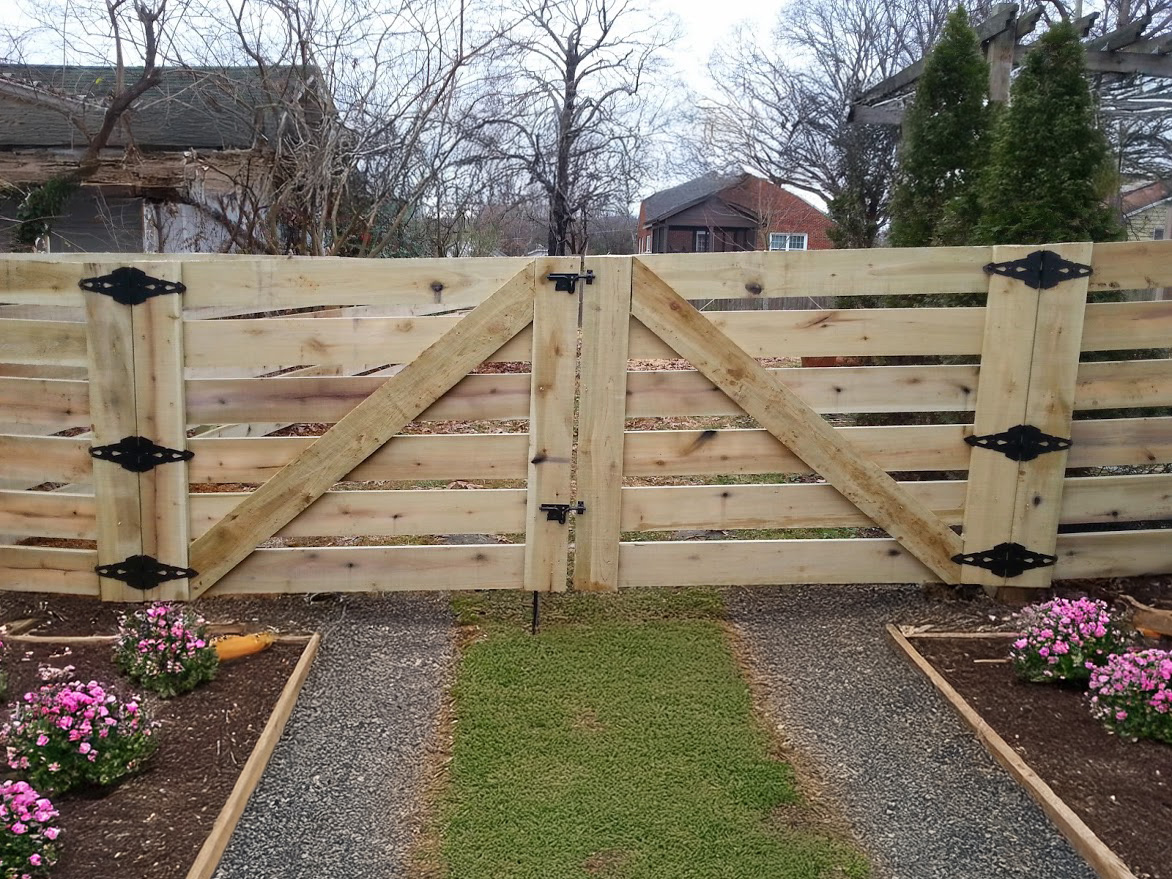
What Counts as a Lawful Fence in Tennessee?
Tennessee does not leave “a good fence” to opinion. The state defines a lawful fence in statute, down to wire gauge, wire spacing and post spacing. If you keep livestock in East Tennessee, that definition decides who is responsible when an animal gets out.
Tennessee is a fence-in state
Under Tenn. Code Ann. § 44-8-401, it is unlawful for a livestock owner to willfully allow livestock to run at large. A violation is a Class C misdemeanor.
That single sentence sets the direction of the whole system. In a fence-out state, the burden sits with the neighbor who wants animals kept off their land. In Tennessee the burden sits with the owner of the animals. Your fence is your responsibility, not your neighbor’s problem.
Note the word willfully. The criminal offense is not automatic the first time a gate gets left open. Willfulness is doing it knowingly. That is a meaningful limit, and it is separate from any civil liability for damage the animals cause — two different questions, and the second one is worth a conversation with an attorney rather than a fence contractor.
What the statute actually requires
Tenn. Code Ann. § 44-8-102 lists several constructions that qualify as a sufficient fence. The specifications are unusually precise:
| Type | Requirement |
|---|---|
| Stone fence or wall | Substantial, 3½ feet high |
| Post and plank, or post and rail | 4 feet high |
| Common worm or crooked rail | 5 feet high |
| Osage orange hedge | At least 4 feet high, at least 18 inches across the top, close enough to turn stock |
| Planks and wire | See below |
| Wire | See below |
The statute also allows synthetic materials meeting generally acceptable standards, and technology-based confinement systems.
The plank-and-wire spec
Two planks at least 6 inches wide, on posts 8 feet apart. The bottom plank sits 3 inches off the ground; the second plank sits 4 inches above the first. Four strands of barbed wire go above them, the topmost at 4½ feet, the bottom wire 4 inches above the top plank, with the middle strands at 9 inches and 21 inches.
The all-wire spec
Nine horizontal wires. Top and bottom are standard No. 9; the seven between them are No. 11. Measured up from the ground, the gaps run 3½, 3½, 4, 4, 6, 8, 10 and 10 inches — tight at the bottom, opening as it climbs, which is exactly how you stop a young animal going under. Vertical stays sit 2 feet apart through the lower section and 4 feet apart above. Posts go one rod apart — 16½ feet, an old surveyor’s unit that still appears in the code.
The statute is a floor, not a specification
Here is the part worth saying plainly: meeting § 44-8-102 makes a fence lawful. It does not make it right for your animals.
A nine-wire fence built exactly to code will hold cattle. Put horses behind it and you have a different problem — horses run into fence, and wire that a cow leans on is wire a horse can get a leg through. Barbed wire meets the statute and is still the wrong answer for horses. The legal minimum and the correct build are two separate questions, and on a horse property they are rarely the same fence.
Ground matters too. A spec written in inches assumes a post that stays put, and East Tennessee subsoil runs 35 to 60 percent clay under about 52 inches of rain a year. A fence at the legal height today is a fence at a different height after two wet springs if the posts were set shallow.
Shared boundary fences
Tennessee handles fences on a property line separately. Under § 44-8-202 the rule is essentially use it, share it: a neighbor who joins to your fence and uses it as their own boundary can be required to pay a share. If the two of you cannot agree, § 44-8-204 provides for three disinterested freeholders to assess the matter, and § 44-8-205 sets a ten-day window for judgment.
We cover this in more detail in who pays for a fence between neighbors in Tennessee.
One common mix-up
People searching this topic often land on § 44-8-413 and assume it applies. It does not — that section covers civil liability for injury caused by dogs, not livestock. Different animal, different rules.
What we would actually build
For cattle on East Tennessee ground, woven wire with a barbed top strand, set on posts deep enough for the clay. For horses, no-climb woven wire with a sight rail, or board. For a boundary you share with a neighbor, have the conversation about cost before the posts go in, not after.
We have been building farm and livestock fence across East Tennessee since 1973. If you want a real number for your acreage, request a free on-site estimate or call (865) 988-9935.
Statutory citations verified September 2026 against the Tennessee Code, Title 44, Chapter 8. This is general information about what the statutes say, not legal advice — if liability or a boundary dispute is at stake, talk to a Tennessee attorney.
Related: Horse fence installation · Farm & field fence · The 7-year fence law · All fence answers