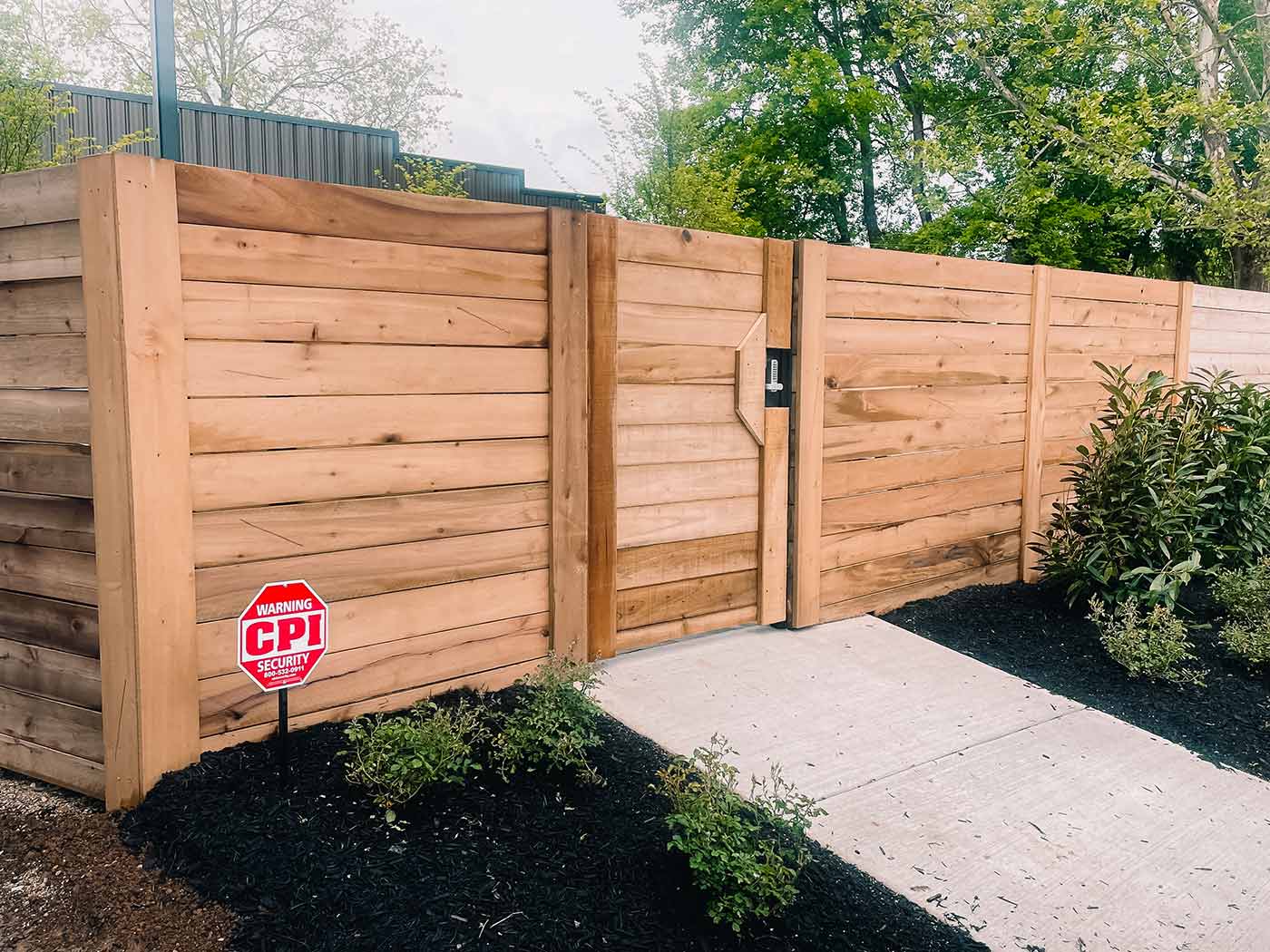
Who Pays for a Fence Between Neighbors in Tennessee?
Short answer: In Tennessee, your neighbor generally owes you nothing toward a fence you build on your own — unless and until they join to it or use it as their own boundary fence. That's the trigger in the statute, and it's the part most people get backwards.
What Tennessee law actually says about shared fences
Tennessee's partition fence statutes live at Tennessee Code Annotated Title 44, Chapter 8, Part 2. A "partition fence" is defined in § 44-8-201 as a fence erected on the line between lands owned by different people.
The cost-sharing rule is § 44-8-202, and it's worth reading in full:
"Partition fences may be erected and repaired at the expense, jointly, of the occupants or owners; or if a person makes a fence a partition fence, by joining to it or using it as such, that person shall pay to the person erecting it that person's proportion of the expense."
Two different things are happening in that sentence. Neighbors may split the cost jointly — that's a voluntary arrangement. But the obligation that the law will actually enforce arises when someone joins to or uses an existing fence as their partition fence. At that point they owe their share of what it cost to build.
So can I make my neighbor pay half?
Not simply by building a fence on the line and sending an invoice. Under § 44-8-202 the neighbor's obligation is triggered by their conduct — attaching to your fence, or using it as the enclosure for their own property. A neighbor who ignores your new fence entirely, keeps their own separate fence, or has no need to enclose anything generally owes nothing.
This is a meaningful difference from how people usually assume it works, and it's why "my neighbor has to pay half" is one of the most common misconceptions we hear.
What if we disagree about the amount?
The statute has a specific and rarely-cited remedy. Under § 44-8-204, if the parties can't agree on what's fair, a judge orders three disinterested freeholders to examine the fence and determine fair compensation.
If payment isn't made within ten days after the freeholders report, § 44-8-205 lets the judge enter judgment and issue execution.
There's also § 44-8-203: if either party refuses or neglects their portion of a partition fence, they're liable for damages the other sustains to enclosures or crops from trespassing livestock.
Does any of this apply to a suburban privacy fence?
Partly, and this is where honesty matters more than a tidy answer.
These statutes sit in Title 44, which is Tennessee's agriculture and animal title, and the surrounding sections are clearly aimed at livestock enclosure. The text of § 44-8-202 is not limited to farms on its face, but the practical enforcement history is agricultural.
For a typical Knoxville backyard fence, the realistic answer is that cost-sharing happens because the neighbors agreed to it, not because a court compelled it. If you're planning to split the cost, put it in writing before the fence goes in — who pays what, who owns it, who maintains it, and what happens if one of you sells. A one-page written agreement prevents almost every dispute we've seen.
Who owns a fence on the property line?
If you paid for it and it sits entirely on your side of the surveyed line, it's yours. If it straddles the line, ownership gets murky and generally follows whatever the neighbors agreed to — which is the problem, because usually nothing was agreed.
This is the practical argument for setting a fence a few inches inside your own line rather than exactly on it. You keep clear ownership, you keep access to both sides for maintenance, and you avoid the conversation entirely. The tradeoff is that you give up a few inches of yard.
What about livestock fences?
Tennessee is a fence-in state. Under § 44-8-401(a) it's unlawful for a livestock owner to willfully allow livestock to run at large, and a violation is a Class C misdemeanor. § 44-8-402 lets a damaged party place a lien on trespassing livestock.
The statutory specifications for a "lawful fence" are in §§ 44-8-102 and 44-8-103, and they're useful if you're fencing acreage:
| Fence type | Statutory minimum |
|---|---|
| Stone wall | 3½ feet high |
| Post and rail | 4 feet high |
| Barbed wire for horses or cattle | Not less than 5 strands, topmost wire not less than 4½ feet |
What we tell customers
- Get the line surveyed if there's any doubt. A fence built to the wrong line is a title problem, not a free land grab.
- Talk to the neighbor first. Not because the law requires it — it doesn't — but because it costs nothing and prevents most of what goes wrong.
- Write down any cost-sharing agreement before anyone digs.
- Set inside your own line unless you have a written agreement with the neighbor to share the fence.
Sources
- Tennessee Code Annotated § 44-8-201 — definition of partition fence
- Tennessee Code Annotated § 44-8-202 — joint expense and the join-to-or-use trigger
- Tennessee Code Annotated § 44-8-203 — liability for damages from trespassing stock
- Tennessee Code Annotated §§ 44-8-204, 44-8-205 — three freeholders, ten-day payment, judgment
- Tennessee Code Annotated §§ 44-8-401, 44-8-402 — running at large, lien on trespassing livestock
- Tennessee Code Annotated §§ 44-8-102, 44-8-103 — lawful fence specifications
- National Agricultural Law Center, Tennessee fence law compilation
We build fences; we are not attorneys. This is general information about Tennessee statutes, not legal advice. For a specific boundary or cost dispute, talk to a Tennessee real estate attorney.