Wood Fence vs. Vinyl Fence in Knoxville TN — Which Lasts Longer?
We get this question more than almost any other: Should I get wood or vinyl?
After more than 50 years of installing both in Knox, Loudon, Roane, Anderson, Blount, and Sevier counties, we have a pretty clear answer — with a few important caveats.
The Climate Factor: Why East Tennessee Is Different
East Tennessee is not Arizona. It's not Minnesota either. It sits in a humid subtropical climate zone with hot, wet summers; mild but variable winters; and soil conditions — particularly the famous red clay — that affect how fence posts hold and how wood behaves at ground level.
That climate is harder on fences than most homeowners realize. Humidity accelerates wood decay at the post-to-soil interface. Freeze-thaw cycles in January and February heave posts over time. Summer UV breaks down surface finishes faster than in drier climates. And termites are active across the region.
Any honest comparison between wood and vinyl in East Tennessee has to account for these conditions. Here's how each material holds up.
Wood Fencing in East Tennessee
The Case For Wood
Wood is the classic choice — and there are real reasons it's held that position for generations. A well-built wood privacy fence has a warmth and character that vinyl can't quite replicate. It fits naturally into the visual landscape of East Tennessee properties, from suburban Knoxville backyards to acreages in Loudon County.
Wood is also highly customizable. Heights, styles, profiles, and finishes can be adapted to the specific property in ways vinyl can't match. Shadow box, dog ear, board-on-board, horizontal slat, French Gothic, Chippendale gate inserts — wood gives you design flexibility.
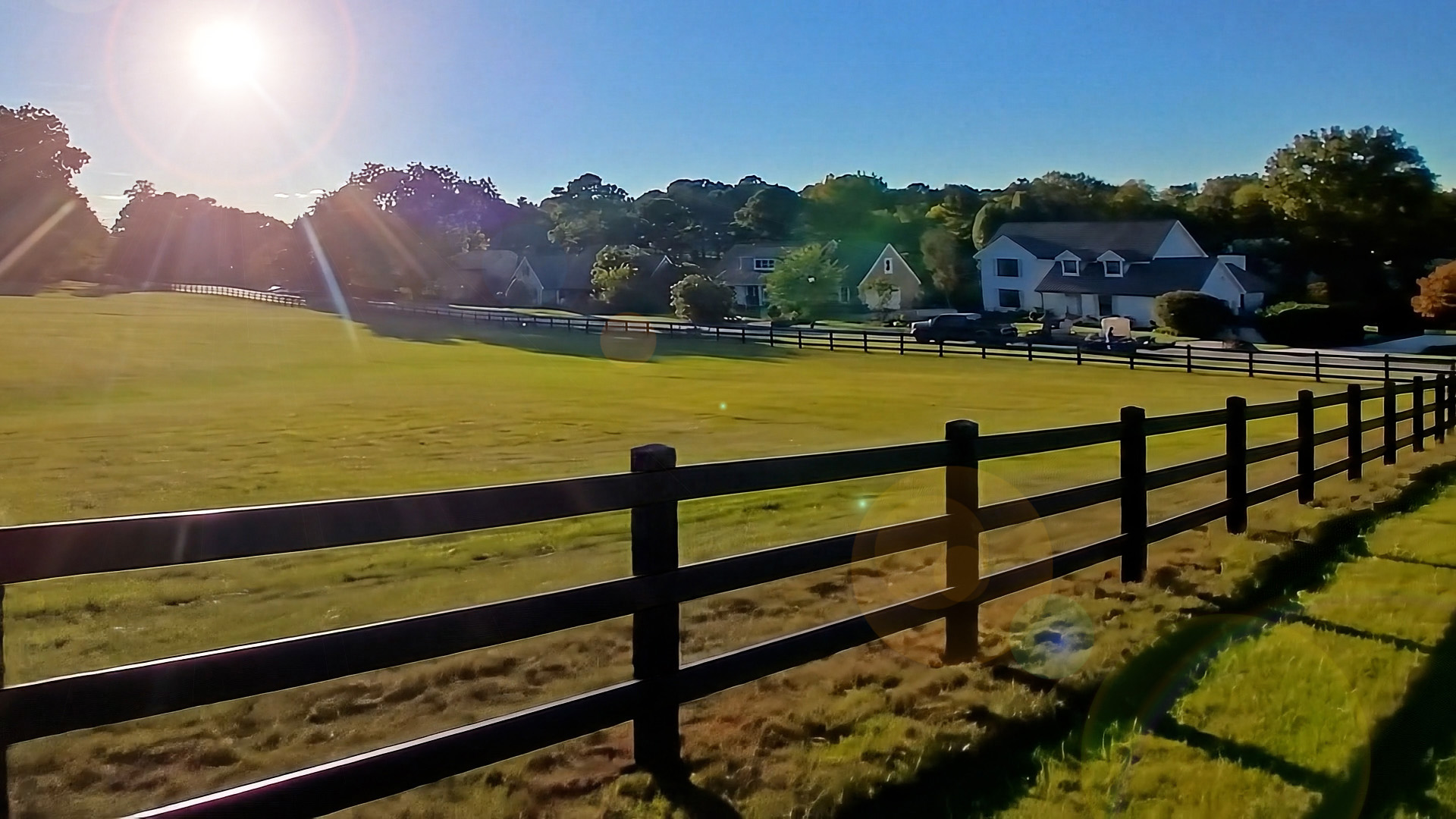
For large agricultural properties, wood is often the only practical material. Farm fencing — 4-board, 3-board, split rail — doesn't translate to vinyl in any meaningful way.
The Right Wood for East Tennessee
This is where we're going to be blunt, because we've watched a lot of homeowners make expensive mistakes.
Pressure-treated pine is the right wood for East Tennessee. It's treated to resist rot and insect damage, holds up well in local soil conditions, and performs reliably for 15-20 years with reasonable maintenance.
Western Red Cedar is not the right wood for East Tennessee — despite what you might have read or heard. Cedar performs beautifully in the Pacific Northwest, where the climate is cooler and drier. In East Tennessee, cedar is approximately twice as expensive as pressure-treated pine and typically lasts about half as long. We recommend cedar only in very specific applications where aesthetics are paramount and the customer understands the maintenance commitment required.
What Wood Maintenance Actually Looks Like
Pressure-treated pine doesn't require staining to prevent rot — the treatment handles that. But if you want to maintain color and appearance, plan on staining or sealing the fence surface every 2-3 years. Without treatment, expect the boards to gray within a year or two, which many people actually prefer. The structural integrity is separate from the surface appearance.
What wood does require is inspection. Post bases and board ends at ground level are the failure points. Checking annually for soft spots, rot, and insect activity lets you catch problems early. A board replacement here and there is normal over a 15-20 year fence life.
Realistic Lifespan in East Tennessee
A pressure-treated wood fence installed correctly — with posts set deep in the red clay, good drainage at the base, and reasonable maintenance — will serve you well for 15 to 20 years in East Tennessee. Some fences last longer with attentive care. Some fail earlier with neglect or poor installation.
Vinyl Fencing in East Tennessee
The Case For Vinyl
Vinyl's core appeal is simple: you install it and largely forget it. No staining, no sealing, no painting. A garden hose removes most dirt. The material doesn't rot, doesn't attract termites, and won't splinter. For a busy family that wants a fence that looks good and doesn't demand attention year after year, vinyl is genuinely compelling.
Quality vinyl holds its structural integrity well in East Tennessee's climate. Modern vinyl fencing with UV inhibitors resists the fading and yellowing that plagued earlier-generation products. A properly installed vinyl privacy fence should look close to its original condition a decade into its life.
What to Watch For With Vinyl in Tennessee Heat
Not all vinyl is equal. Cheap, thin-walled vinyl can warp, bow, and yellow in Tennessee's summer heat. We've replaced plenty of it.
What matters is wall thickness, UV inhibitor content, and the internal reinforcement at posts and rails. Quality vinyl fencing is manufactured to handle thermal expansion and contraction, which is significant in East Tennessee where the temperature swing between January and July is substantial. Proper installation — accounting for that movement — is as important as the product itself.
The Aesthetic Tradeoff
Vinyl privacy panels have a uniform, consistent look that some homeowners love and others find too flat. If you want the natural variation of wood grain, or the ability to change colors over time — vinyl isn't the answer. Once you choose your vinyl color at installation, that's the color for the life of the fence.
Vinyl also doesn't translate well to creative styles. Standard privacy panels, picket, and ranch rail are where vinyl excels. Elaborate custom profiles, angled cuts to follow steep terrain, and non-standard gate designs are harder to execute in vinyl than in wood.
Realistic Lifespan in East Tennessee
Quality vinyl installed correctly should give you 25 to 30 years in East Tennessee, with minimal maintenance required. Many manufacturers offer limited lifetime warranties on the material. Read the fine print — installation quality still determines structural performance regardless of what the warranty says.
Head to Head: The Key Comparisons
Upfront Investment
Wood is less expensive upfront. For most privacy fence projects in Knoxville and surrounding counties, wood comes in below vinyl for material and installation combined. If budget is the primary constraint, wood is typically the more accessible choice.
Long-Term Cost
This is where the comparison shifts. When you factor in staining every 2-3 years, occasional board and post replacements, and the likelihood of an earlier full replacement, the lifetime cost of a wood fence closes the gap considerably with vinyl.
Maintenance Commitment
Wood: moderate. Annual inspection plus surface treatment every few years.
Vinyl: minimal. Clean it when it gets dirty. That's essentially it.
Appearance
Wood: warm, natural, customizable, ages with character.
Vinyl: clean, uniform, consistent, doesn't age the same way wood does.
Performance in East Tennessee Climate
Wood: vulnerable at post bases and board ends in this humid climate. Pressure-treated pine handles it well with good installation and drainage. Cedar does not.
Vinyl: excellent moisture resistance, good UV resistance in quality products, handles freeze-thaw well. Cheap vinyl underperforms in heat.
Design Flexibility
Wood: high. Custom heights, profiles, styles, terrain-following cuts.
Vinyl: moderate. Standard profiles and colors work great. Custom design is limited.
The Honest Recommendation
If you want low maintenance, a longer lifespan, and you're fine with the standard privacy or picket aesthetic — quality vinyl is the better long-term investment for most East Tennessee homeowners.
If you want design flexibility, a more natural look, a lower upfront investment, or you're fencing a farm or agricultural property — pressure-treated pine is the right choice. Just commit to the maintenance, and make sure whoever installs it knows what they're doing with post depth and drainage in red clay soil.
If someone is trying to sell you Western Red Cedar for a privacy fence in Knoxville, get a second opinion.
What LC Fence Recommends For Your Specific Property
The right answer depends on your property, terrain, HOA requirements, timeline, and priorities. There's no single correct answer for every East Tennessee homeowner.
What we can do is walk your property, understand what you're trying to accomplish, and give you a straight recommendation — not just the material that happens to have a better margin for us.
We've been building wood and vinyl fences in East Tennessee since 1973. We've watched both materials age in this specific climate. We know what holds up and what doesn't.
Call us at (865) 988-9935 or visit lcfence.com to schedule your free estimate. We serve Knox, Loudon, Roane, Anderson, Blount, Sevier, and the surrounding East Tennessee counties.