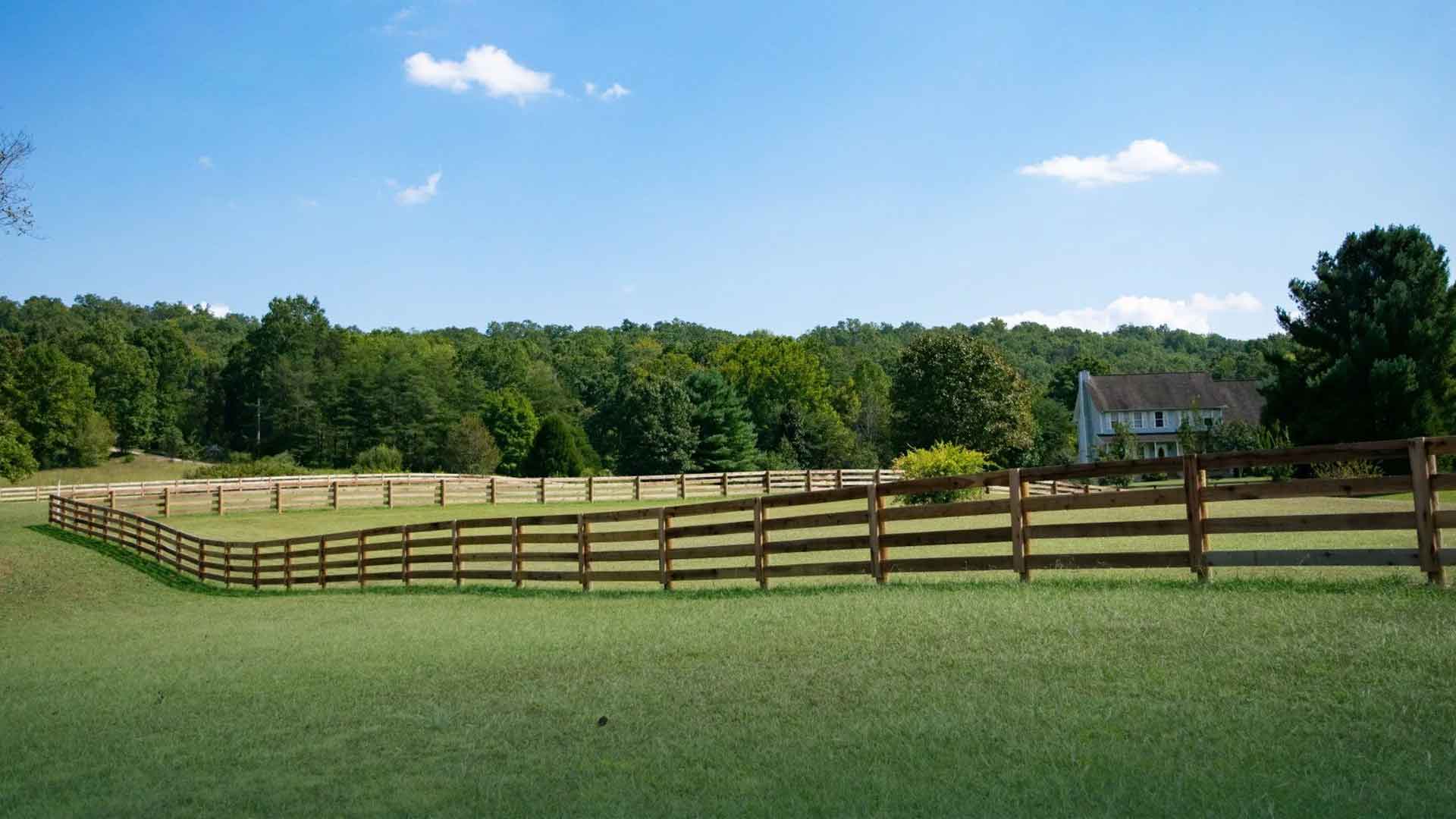
TAEP Livestock Fencing Cost Share in Tennessee (2026-27)
Yes. Tennessee's TAEP Livestock Fencing program, new for the 2026-2027 cycle, reimburses approved livestock producers $2.00 per linear foot of new, permanent livestock fence, up to a $3,000 maximum, which works out to about 1,500 feet. Fence must be purchased between October 1, 2026 and August 1, 2027, and the reimbursement request is due August 1, 2027.
Loudon County Fence is a veteran-owned fence contractor in Lenoir City that has built farm, horse, and livestock fence across East Tennessee since 1973. This guide explains the program in plain English, using the Tennessee Department of Agriculture's own published rules, so you can tell whether your fence project qualifies before you spend money on it.
What is the TAEP Livestock Fencing program?
It is a cost-share program run by the Tennessee Department of Agriculture (TDA) under the Tennessee Agricultural Enhancement Program (TAEP) that pays back part of the cost of new livestock fence for qualifying farms. TAEP has offered cost share on equipment, working facilities, genetics, and similar farm investments for years. Livestock Fencing is a separate program that TDA lists as new for the 2026-2027 year, for producers of cattle, equids (horses, mules, donkeys), goats and sheep, and swine.
The key rule, in TDA's words on the Livestock Fencing program page: "Reimbursement is based on $2.00 per linear foot up to the program maximum." The program maximum listed for Livestock Fencing is $3,000.
TDA also notes on its 2026-2027 TAEP updates page that reimbursement across TAEP is now based on 50% of eligible expenses and that "The option of 35% cost share is no longer available." Livestock Fencing has been added to TAEP's Beginning Farmer Option as well. For fencing specifically, the per-foot rate is what sets the payment, so plan around footage.
How much will TAEP pay for my fence?
Multiply your linear feet of new fence by $2.00, and stop at $3,000. Any project over 1,500 feet hits the cap. TDA measures footage as the number of spans times the spacing between posts, measured center of post to center of post.
| New fence installed | Calculation | Reimbursement |
|---|---|---|
| 500 feet | 500 x $2.00 | $1,000 |
| 1,000 feet | 1,000 x $2.00 | $2,000 |
| 1,320 feet (one-quarter mile) | 1,320 x $2.00 | $2,640 |
| 1,500 feet | 1,500 x $2.00 | $3,000 (maximum) |
| 2,640 feet (one-half mile) | Capped | $3,000 (maximum) |
For most cattle and horse operations, $3,000 covers part of a fence project, not the whole thing. It is real money, but it works best when it is planned into a project you were going to build anyway, such as replacing a worn-out perimeter or adding cross-fence for rotational grazing.
What kind of fence qualifies?
New, permanent perimeter fence or cross-fence that contains qualifying livestock, built from new materials and finished by the deadline. According to TDA's 2026-2027 Livestock Fencing Eligible Items and Requirements, eligible work falls into three categories:
- Permanent perimeter fencing enclosing pasture or land used for qualifying livestock.
- Permanent cross-fencing that creates paddocks, improves grazing management, separates groups of animals, or controls access to sensitive areas.
- Complete replacement of a clearly defined segment of perimeter or cross-fence that is unsafe, badly deteriorated, or no longer holds livestock.
The construction minimums are specific:
| Requirement | Cattle and equids | Goats, sheep, and swine |
|---|---|---|
| Minimum fence height | 54 inches | 48 inches |
| Maximum post spacing | 20 feet | 20 feet |
| Minimum herd size (maximum head count in the last 12 months) | 30 cattle, or 20 equids in a commercial equine business (breeding, training, and/or boarding) | 50 goats and/or sheep combined, or 100 swine |
Qualifying fence types include steel, treated wood, or vinyl board fence with at least 4 rails; barbed wire with at least 5 strands; high-tensile smooth wire with at least 5 strands; fixed knot or field woven wire; and non-climb woven wire. Qualifying posts include steel, T-posts, treated wood, and rigid PVC vinyl.
Two practical notes from the field. First, a 4-board fence at 54 inches is taller than a lot of older board fence in East Tennessee, so check your planned height against the minimum before you order material. Second, 20 feet is a maximum, not a target. On hilly ground, line posts belong closer together. The University of Tennessee Extension's Planning and Building Fences on the Farm (PB1541) puts it this way: "Line posts are moved closer and closer together as the terrain goes from flat to hilly."
What does TAEP not pay for?
Repairs, gates, temporary fence, yard fence, and anything bought before October 1, 2026 are out. TDA is direct about repairs: "Routine repair, patching, replacement of a few posts, or replacement of isolated strands of wire would not be eligible."
The ineligible list also includes:
- Fencing purchased before the allowable purchase date
- Fencing intended primarily for wildlife, hunting preserves, or exotic animals
- Materials delivered but not installed
- Owner labor
- Portable corral panels, gates, guard rail, and wire panels
- Poultry or chicken wire
- Repairs and replacement parts
- Residential, ornamental, privacy, dog, or yard fencing
- Temporary poly wire, poly tape, step-in posts, and portable electric netting
- Used items, including anything bought at auction
The gates exclusion catches people. If a project needs new gates, budget for them separately.
Can I hire a contractor and still get reimbursed?
TDA's published rules list owner labor as ineligible but do not directly address contractor labor. Before you sign a contract and count on reimbursement for the installed cost, email the program at livestock.fencing@tn.gov and get the answer in writing. Two rules matter either way: receipts must be in the approved applicant's name, and TDA states that quotes and purchase orders are not receipts. Ask your contractor for an itemized, paid invoice in your name that shows the footage.
Who is eligible to apply?
Tennessee farm operators who are at least 18, file a farm tax return, and meet the herd minimum for the program. TDA's TAEP applicant eligibility page lists these requirements:
- U.S. citizen or lawfully present in the United States at the time of application
- At least 18 years old
- A Tennessee resident living in Tennessee
- Filed a Federal IRS Schedule F (Form 1040), Profit or Loss from Farming, for one of the years TDA specifies (TDA can advise on alternate documentation)
- Operating a farm in Tennessee, meaning sharing in the expenses, profits, and/or management of production; one applicant per farm operation
- Meeting the program's minimum head of livestock
There is also an education requirement. In TDA's words: "Approved applicants are required to have a current eligible master certification at time of reimbursement." TDA accepts certificates completed in 2022 or later, and the certificate must be held by the approved applicant. Agricultural associations, clubs, and non-profits cannot apply.
When are the 2026-2027 deadlines?
The 2026 application window was October 1-7, 2026, approval letters go out in mid-December 2026, and fence must be finished with the reimbursement request in by August 1, 2027. These dates come from TDA's TAEP timeline and the Livestock Fencing program page:
| Milestone | Date |
|---|---|
| Application period | October 1-7, 2026 |
| Allowable purchase dates begin | October 1, 2026 |
| Approval notifications mailed | Mid-December 2026 |
| Reimbursement packets mailed | January 2027 |
| Purchases end and reimbursement request due | August 1, 2027 |
TDA states: "Allowable purchase dates for Livestock Fencing are from October 1, 2026 – August 1, 2027." Note that purchases can start before approval letters arrive. Anything you buy before you are approved is at your own risk, because approval is not guaranteed. Backordered material that is not delivered to the farm by the deadline may not be eligible, and the fence must be fully installed, functional, and ready for livestock by August 1, 2027.
If you missed the October 2026 window, TAEP takes applications once a year in early October. Watch the TAEP site in late summer for the next cycle's rules, since programs and amounts can change year to year.
How do I get reimbursed after I am approved?
Build the fence, document it the way TDA asks, and submit before August 1, 2027. A workable sequence:
- Wait for your approval letter (mid-December 2026) and read the reimbursement packet that follows in January 2027.
- Confirm your master certification is current, because it is checked at reimbursement, not at application.
- Lay out the fence and call Tennessee 811 at least three working days before any post holes are dug. See our guide to calling 811 before a fence in Tennessee.
- Build to the program minimums: height of 54 or 48 inches depending on species, posts no more than 20 feet apart, new materials only.
- Photograph each fence run showing at least 3 spans.
- Print an aerial diagram that highlights where the new fence is.
- Gather receipts in the approved applicant's name, and be ready to show proof of payment if asked.
- Submit the reimbursement request well ahead of August 1, 2027. Waiting until July leaves no room for a missing photo or receipt.
What makes a cost-share fence last in East Tennessee?
Corner and end bracing, post depth, and correct wire tension matter more than anything else, especially in our clay and rock. A fence that meets the TAEP minimums on paper can still fail in a few years if the corners move. UT Extension's PB1541 notes that "A corner post will need a brace assembly for each fence leading to it," and that "Adequate tension for 12 1/2 gauge high-tensile wire is 200 pounds."
What we see on East Tennessee farms:
- Clay holds water. Corner and gate posts set shallow in wet clay lean over time and let the whole run go slack. Depth and drainage at the post matter. More on that in why fence posts lean in East Tennessee clay.
- Rock is common. Ridges and hillsides in Loudon, Blount, Monroe, and Roane counties often hit rock at shallow depth. Planning brace locations around rock before you order material saves time and money.
- Slopes change the layout. Rolling pasture needs closer line posts and extra attention where the fence crosses a draw, so wire stays tight to the ground.
- Cross-fence for grazing pays twice. Paddock fencing for rotational grazing is specifically listed as eligible, and it is often the best use of the $3,000 because it is new work rather than a replacement.
For a broader look at fence choices by animal, see our farm, horse, and livestock fencing guide and our horse fence page.
Are there other cost-share options for farm fence?
Yes. The USDA Natural Resources Conservation Service (NRCS) offers fencing through conservation programs such as the Environmental Quality Incentives Program (EQIP), usually tied to a conservation plan for grazing or protecting streams. Rates, rankings, and deadlines vary, so start with your county's USDA Service Center. Check with TDA and NRCS before combining programs on the same fence.
If your fence sits on a property line, Tennessee's partition fence law also affects who pays. See what counts as a lawful fence in Tennessee.
Key facts
- TAEP Livestock Fencing is a new Tennessee Department of Agriculture cost-share program for the 2026-2027 cycle.
- It reimburses $2.00 per linear foot of new permanent livestock fence, up to $3,000 (about 1,500 feet).
- Minimum height is 54 inches for cattle and equids and 48 inches for goats, sheep, and swine, with posts no more than 20 feet apart.
- Minimum herds are 30 cattle, 20 equids in a commercial equine business, 50 goats and sheep, or 100 swine.
- Repairs, gates, owner labor, temporary fence, and yard fence are not eligible.
- Allowable purchases run October 1, 2026 to August 1, 2027, and the reimbursement request is due August 1, 2027.
Planning a livestock fence this winter?
Winter is a good time to build farm fence in East Tennessee: pastures are dormant, and getting it done early keeps you well ahead of the August 1, 2027 deadline. Loudon County Fence has built farm and livestock fence across East Tennessee since 1973 and holds Tennessee Unlimited Contractor License #54371. We can walk your fence line, measure footage, and give you an itemized written estimate you can match against the program rules. Answers to other common questions are on our fence answers page.
Request a free on-site estimate or call (865) 988-9935.
This article summarizes published Tennessee Department of Agriculture program rules as of October 2026. It is not legal or tax advice. TDA decides eligibility; confirm details with the TAEP office before you buy.