Fence Rules in Farragut, TN: Permits, Easements and HOAs
Farragut is more permissive on fence height than almost any of its neighbors — seven feet with no building permit. It is also the place where more fence projects run into trouble than anywhere else we work, and height is almost never the reason.
Here is what actually governs a fence in Farragut, and where the problems come from.
The Height Rule
The Town of Farragut does not require a building permit for fences up to seven feet. Over seven feet, a permit is required.
That is taller than the City of Maryville allows before treating a fence as an accessory structure, and shorter than unincorporated Blount County's ten-foot threshold. Three different numbers within a half-hour drive, which is why generic "Tennessee fence height" advice is useless here.
One thing worth understanding: the permit exemption is not a blanket approval. Building permit requirements are separate from zoning, setback and plat requirements. Not needing a permit does not mean the fence can go anywhere.
Where Farragut Projects Actually Go Wrong
Easements
This is the big one, and it is specific to how Farragut's newer subdivisions were platted.
A fence placed within a utility, drainage or construction easement can be removed — and does not have to be reinstalled. Not relocated at the utility's expense. Removed.
Plenty of Farragut back yards have easements running through them that are invisible from the surface. The homeowner has no idea until a utility crew needs access. If you are fencing a rear line in a subdivision built in the last thirty years, the easement question is not optional.
Stormwater
Farragut does not permit fences where they would impede the free flow of stormwater. On a sloped lot, along a drainage swale, or at the low corner where two yards drain together, a solid privacy fence can become a dam.
This is a real design constraint, not a technicality. It sometimes means a shadowbox or spaced-picket section at the low end rather than solid panel, which also happens to be easier on posts.
The Right-of-Way
The property owner is responsible for making sure the fence sits on their property and not in the public right-of-way or a pedestrian easement. Farragut has a lot of greenway and sidewalk frontage, and the right-of-way often extends further back from the street than people assume.
The town's own guidance is to get a survey. We agree. On an ambiguous Farragut lot it costs less than moving a fence, and far less than losing one.
Pool Barriers Are a Separate Permit
The seven-foot exemption does not apply to pool fencing. A fence serving as a swimming pool barrier requires a permit and is inspected against the 2018 International Swimming Pool and Spa Code.
That code governs barrier height, gaps beneath and between pickets, and self-closing, self-latching gate hardware with the latch above a specified height. Ornamental aluminum is the most common compliant choice because it meets the spacing requirements and does not rust in a wet environment.
If you are installing a pool and a fence together, the fence usually falls under the pool permit. Ask, rather than assume.
Your HOA Is Stricter Than the Town
Farragut is dense with covenanted subdivisions, and in practice the HOA governs more of your fence decision than the town ordinance does.
Typical covenant restrictions we encounter in Farragut:
- Maximum height below the town's seven feet, often four or six
- Material limited to specific types — many communities prohibit chain link outright in front or side yards
- Color restricted, commonly to white or tan vinyl, or black aluminum
- Placement rules requiring the fence to start at the rear corners of the house rather than run to the front line
- Requirements about which side faces out
An HOA cannot permit what the ordinance forbids, but it can be stricter — and it usually is. In Tennessee an association can place a lien on your property over covenant violations, so get the approval in writing and keep a copy. We have taken down more than one correctly built fence because the homeowner had verbal approval from a board member who later left.
What Works on Farragut Lots
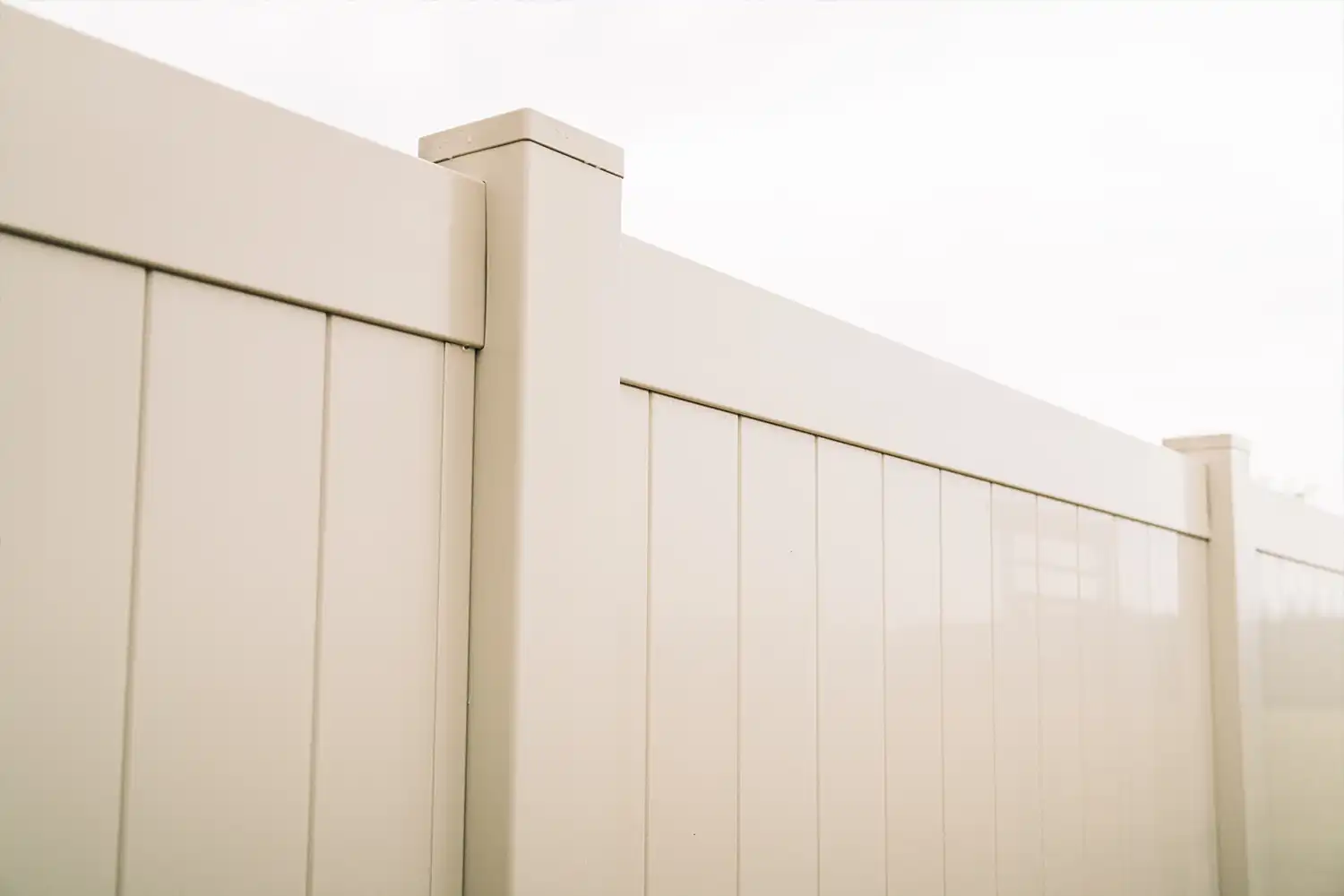
Vinyl privacy is the most requested material here, and for good reason — it is HOA-friendly, holds its color, and never needs staining. It costs more up front than wood.
Ornamental aluminum suits Farragut front yards and pool enclosures. It meets barrier code, does not rust, and satisfies covenants that prohibit solid fencing in visible areas.
Wood privacy remains the value choice, and in 2026 it is the most price-stable material — metal tariffs pushed aluminum and chain link up sharply while lumber held comparatively steady. Board on board finishes both faces, which resolves the which-side-faces-out question that covenants often dictate.
The Soil Question
Farragut sits on the same East Tennessee red clay as the rest of the region, and it behaves the same way — it swells when saturated and shrinks as it dries, working posts out of plumb over a few seasons.
Parts of Farragut also have shelf rock within a couple of feet of the surface. When a crew hits it, the cheap response is to set the post shallow. That post is the one that leans first. Post depth, footing shape and drainage matter more than the material you pick.
Before You Start
- Get HOA approval in writing. Before ordering anything.
- Locate easements. Check the plat, and get a survey if the lot is ambiguous.
- Call 811. Tennessee requires a utility locate before excavation; budget about three business days. Private lines like irrigation and invisible dog fence are never marked.
- Confirm the line. A boundary fence in Tennessee is a shared responsibility, and a fence in the wrong place long enough can become the legal line.
Frequently Asked Questions
How tall can a fence be in Farragut, TN?
Up to seven feet without a building permit. Taller requires a permit. Zoning, setback and plat requirements are separate, and HOA covenants are usually stricter.
Do I need a permit for a fence in Farragut?
Not up to seven feet. Yes for anything taller, and yes for a pool barrier fence, which is inspected to the 2018 ISPSC. Farragut Codes Office: (865) 966-7057.
Can I build a fence on an easement in Farragut?
At your own risk. A fence in a utility, drainage or construction easement can be removed and does not have to be reinstalled.
Does my HOA have to approve my fence?
Almost certainly, and its rules are typically tighter than the town's. Get it in writing.
What does a fence cost in Farragut?
Roughly $10–40 per foot chain link, $14–50 wood privacy, $19–60 vinyl, $24–70 ornamental aluminum, installed. Terrain and gates move the number more than material alone.
We Know These Lots
We have been setting fence in Farragut and across Knox and Loudon counties since 1973. We will walk the property, flag the easement and drainage issues before they become problems, tell you what your covenants are likely to require, and put a firm written price in your hand at no charge.
Call (865) 988-9935 or request a free quote.
Fence installation in Farragut · Permit rules for every East Tennessee jurisdiction · All 24 fence questions answered
Summarized from the Town of Farragut Building & Codes Department guidance and Farragut Municipal Code, current as of 2026. Ordinances change — confirm with the Town before construction. General information, not legal advice.