Tyfield Equestrian: Horse Fencing in East Tennessee
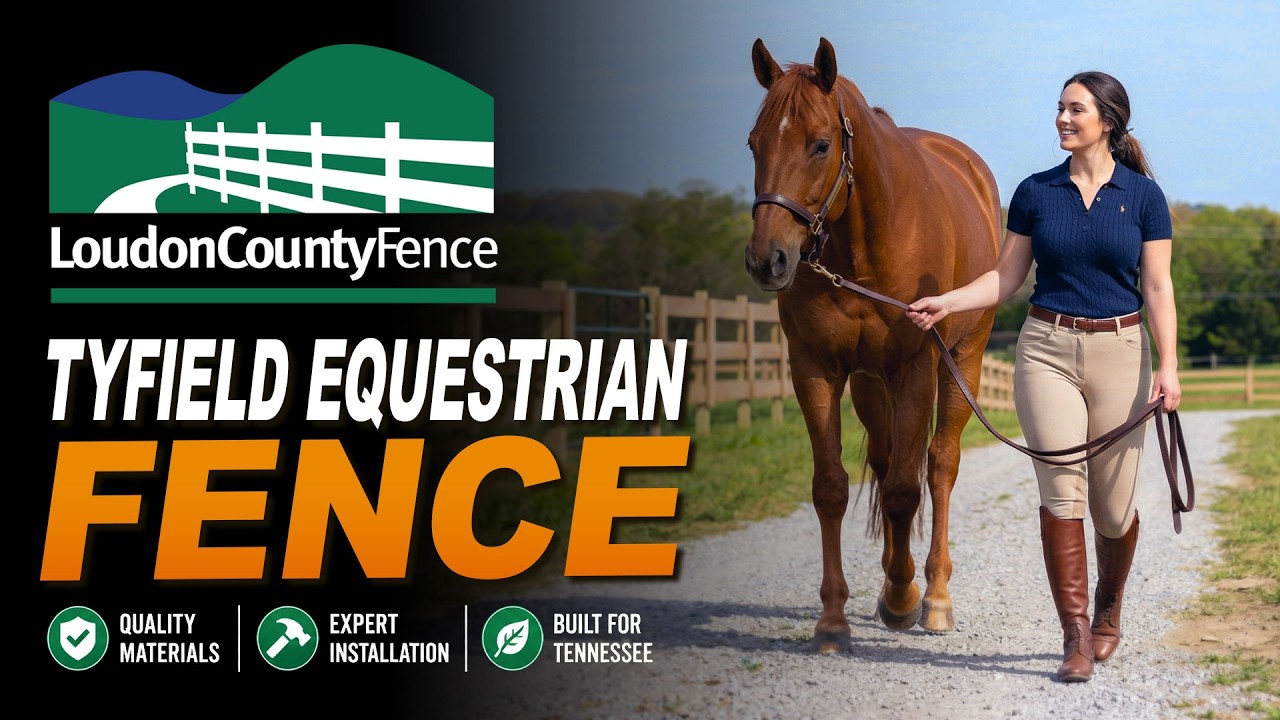
Loudon County Fence installed fencing at Tyfield Equestrian, a steeplechase and equestrian facility in East Tennessee. Horse fence is its own discipline: what keeps cattle in can injure a horse, and the difference is in the details.
Horses Are Hard on Fence, and Fence Can Be Hard on Horses
A horse is a flight animal with thin skin and long legs, and it will lean on, chew, rub and occasionally run into a fence. That combination rules out a lot of what works elsewhere. Barbed wire has no place in a horse pasture. Small-gap wire that a hoof can go through and not come back out is a serious injury waiting to happen. Good horse fence is highly visible, has some give when a horse hits it, and has no sharp edges or entrapment points anywhere a horse can reach.
What We Build for Horse Property
- Four-board fence — the classic. Highly visible, strong, and it looks the way a horse farm is supposed to look. It also asks for maintenance, which is a fair trade for most owners.
- Vinyl and vinyl-coated rail — the same look with far less upkeep. No painting, and no splinters.
- Woven wire with a top board — a common working combination. The wire keeps foals and dogs from going through, and the board gives the visibility.
- High-tensile with proper spacing and visibility — economical on long runs of perimeter and cross fence.
The Layout Matters as Much as the Material
On an equestrian property the fence plan is a traffic plan. Gates need to be wide enough for a tractor and positioned where you actually want to move horses, not where the corner happened to fall. Corners rounded or blocked off keep a horse from being pinned by another. Paddocks, turnout, arena perimeter and lanes each want their own treatment. We walk the property and lay it out before anyone sets a post.
Built for the Long Run
The reason a farm fence fails early is almost always the corners and the post depth. Braced corner and end assemblies carry the load of every run tied to them, and posts set too shallow in East Tennessee clay will heave. We build the assemblies properly because on a working farm, a failed corner is not a cosmetic problem; it is a horse in the road.
Frequently Asked Questions
What is the best fence for horses?
Good horse fence is highly visible, has some flex when a horse contacts it, and offers no sharp edges or places a hoof can get trapped. Four-board wood fence, vinyl or vinyl-coated rail, and woven wire topped with a board are the most common choices. Barbed wire should not be used for horses.
Who installed the fencing at Tyfield Equestrian?
Loudon County Fence installed the fencing at Tyfield Equestrian, a steeplechase and equestrian facility in East Tennessee.
Does Loudon County Fence install farm and equestrian fencing?
Yes. Loudon County Fence installs four-board farm fence, vinyl rail, woven wire, high-tensile and custom paddock, pasture and arena fencing across the ten East Tennessee counties it serves.
Why do farm fences fail early?
Most early failures trace back to two things: corner and end assemblies that were not braced to carry the load of the runs attached to them, and posts set too shallow for the soil. Both show up as leaning and sagging within a few years.
Get a Free On-Site Estimate
Loudon County Fence has been building fences in East Tennessee since 1973. We are veteran-owned, Google Guaranteed, and hold a Tennessee Unlimited Contractor License #54371.
Call (865) 988-9935, stop by our yard at 5482 Hwy 321 N, Lenoir City, TN 37771, or request a free estimate online. We serve Loudon, Knox, Blount, Roane, Anderson, Monroe, Morgan, Sevier, Rhea and Meigs counties.