Does a Fence Mean No Trespassing? Tennessee Purple Paint Law
No. Under Tennessee's criminal trespass law, Tenn. Code Ann. § 39-14-405, a fence by itself does not legally "post" your land. Posting takes signs at every major entrance, or purple paint marks at least 8 inches long and 1 inch wide, 3 to 5 feet off the ground, plus at least one sign explaining them.
Loudon County Fence is a veteran-owned fence contractor based in Lenoir City, building farm, residential and commercial fence across East Tennessee since 1973. Every fall, once deer season gets close, landowners ask us the same thing: "I already have a fence. Isn't that enough?" Here is what the law actually says, and how to mark your fence line so it counts.
Does a fence by itself count as "no trespassing" in Tennessee?
Not for the posting rule in the criminal trespass statute. A fence shows you want people out, but the statute only names two ways to post property: signs, or purple paint marks with a sign.
Tennessee's trespass law works in two layers. First, a person commits criminal trespass by entering or staying on property without the owner's consent. Second, the statute gives the accused person defenses under subsection (b): they reasonably believed they had consent, they did not substantially interfere with the owner's use of the land, and they left right away when asked.
Posting is what takes those defenses away. Subsection (c) says the defenses in subsection (b) "shall not be applicable" if the owner posts the property in one of the two ways the law describes. The words "fence" and "enclosed" do not appear anywhere in the current text of § 39-14-405. So a good fence helps, and it makes it hard for anyone to claim they wandered onto your land by accident, but it is not one of the posting methods the statute lists.
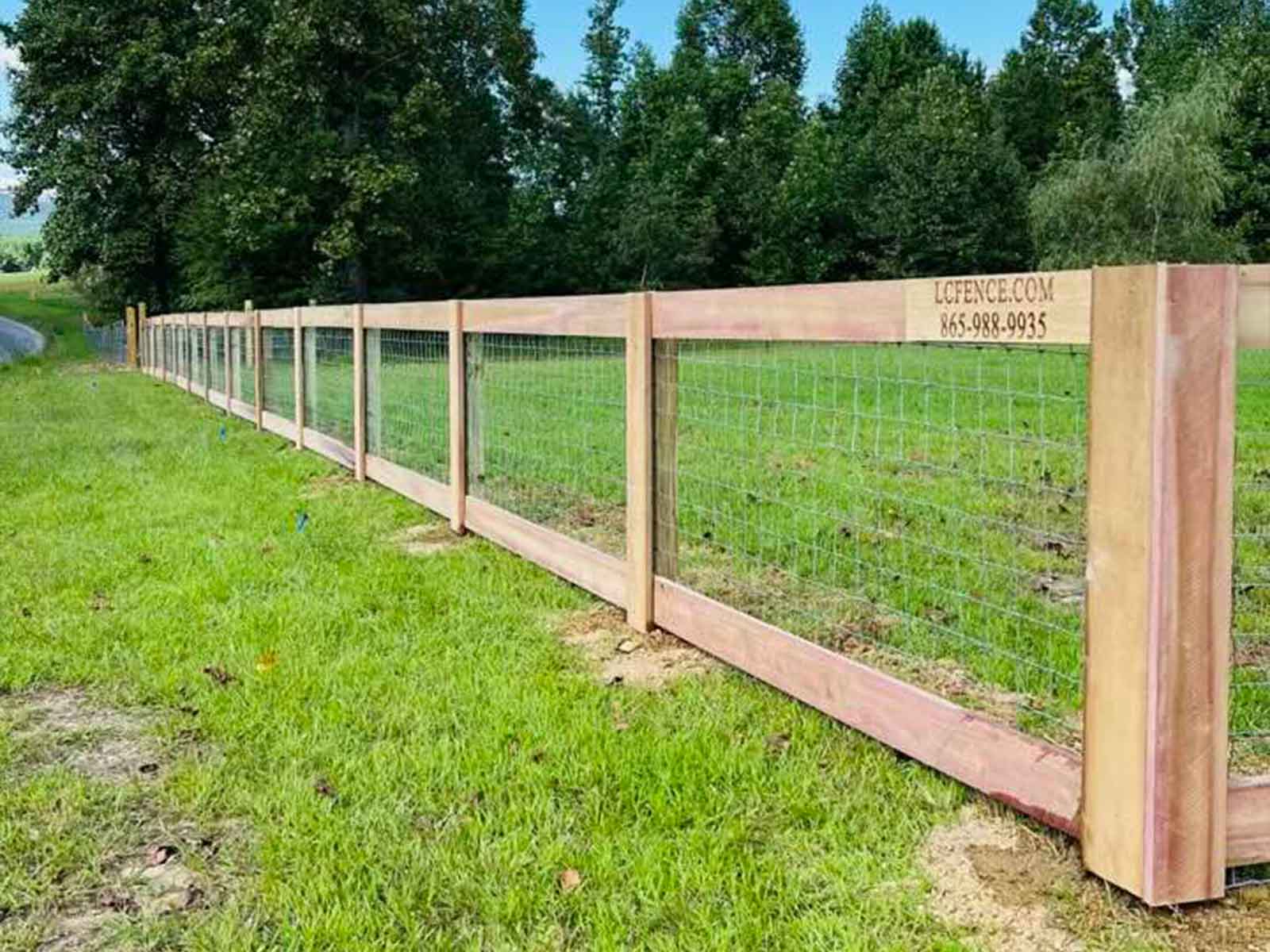
That is why we tell customers to think of the fence and the posting as two different jobs. The fence keeps cattle in and draws a visible line. The signs and paint are what give that line legal weight.
What does the Tennessee purple paint law say?
Tennessee lets landowners use purple paint on trees or posts instead of a solid line of signs, as long as the marks meet a size and height standard and at least one explanatory sign is posted at a main entrance.
Subsection (c)(2), in the 2025 Tennessee Code, covers an owner who "places identifying purple paint marks on trees or posts on the property," provided "at least one (1) sign is posted at a major point of ingress to the property" and "the sign includes language describing that the use of purple paint signifies 'no trespassing.'" (Tenn. Code Ann. § 39-14-405(c)(2))
The statute then sets the specifications. Purple paint "must be vertical lines of not less than eight inches (8″) in length and not less than one inch (1″) in width," placed so that "the bottom of the mark is not less than three feet (3′) or more than five feet (5′) from the ground," and "at locations that are reasonably likely to come to the attention of a person entering the property."
| Requirement | What § 39-14-405(c)(2) says |
|---|---|
| Where the marks go | Trees or posts on the property |
| Shape | Vertical lines |
| Minimum length | 8 inches |
| Minimum width | 1 inch |
| Height | Bottom of mark between 3 feet and 5 feet above the ground |
| Spacing | Not set by number; marks must be placed where a person entering is reasonably likely to see them |
| Sign | At least one sign at a major point of ingress, stating that purple paint means "no trespassing" |
| Paint shade | Not specified beyond "purple" |
One caution: some older articles written when the purple paint option first passed say no sign is needed with purple paint. The current statute does require at least one sign, so do not skip it.
Do I still need a "No Trespassing" sign if I use purple paint?
Yes. Purple paint replaces a long row of signs, not every sign. You need at least one sign at a major entrance that explains purple paint means "no trespassing."
If you skip the paint and use signs only, subsection (c)(1) requires signs "visible at all major points of ingress to the property" that are "reasonably likely to come to the attention of a person entering the property." For a small lot with one driveway, that may be one or two signs. For a 60-acre farm with a road frontage, a creek crossing, a field gate and a logging road, that is a lot of entrances, which is exactly where purple paint saves money and stays up longer than a sign on a nail.
How do I mark fence posts with purple paint the right way?
Paint a vertical stripe at least 8 by 1 inches on posts or trees along the boundary, with the bottom of the stripe 3 to 5 feet off the ground, and focus on the places people actually come in.
Here is how we would approach it on a typical East Tennessee farm or wooded lot:
- Confirm where your line is. Paint on your own posts and trees. If you are not sure the fence sits on the true line, a survey settles it before you mark anything. Our post on Tennessee's 7-year fence law explains why an old fence line and a deed line are not always the same thing.
- Put up the required sign first. Place at least one sign at your main entrance, usually the driveway or main field gate, that says purple paint marks mean "no trespassing."
- Mark every entry point. Gate posts, the ends of farm roads, creek and ditch crossings, gaps in the fence and spots where a neighboring field road meets your line. These are the places "reasonably likely to come to the attention of a person entering."
- Mark the line between entries. The statute sets no spacing. Close enough that the next mark is visible from the last one is a sensible standard in woods, where visibility is short. Corner posts and posts where the line changes direction are good places to mark.
- Measure the height. The bottom of each stripe must sit between 3 and 5 feet above the ground. On a slope, measure from the ground at the base of that post. A painter's template cut to 8 by 1 inches keeps every mark the same.
- Use paint that lasts outdoors. Use an exterior paint made for marking trees or boundaries. Mark both faces of a gate post if people approach from both directions.
- Check marks every year before hunting season. Brush, fading and replaced posts all wipe out marks. A walk of the line in early fall is a good habit.
A practical note from the field: on wood board fence, a stripe on the face of the post reads well from the road. On woven wire or barbed wire fence with metal T-posts, the post face is too narrow for a 1-inch-wide stripe on some posts, so mark the wood line posts, corners and gate posts, or nearby trees, instead. On vinyl or white board fence, many owners prefer marking trees or adding a few short wood marker posts rather than painting the fence itself.
How is posting for hunters different from posting for trespassers?
Hunting has its own rule. Hunters always need the landowner's permission, and Tennessee also has an optional "Hunting by Written Permission Only" posting program with its own sign and paint standards.
The Tennessee Wildlife Resources Agency (TWRA) puts it plainly: "State wildlife laws have always required hunters to get permission from the landowner before hunting." Under the optional program, an amendment to Tenn. Code Ann. § 70-4-106, a landowner who posts correctly can require that everyone hunting the land carry written permission. "The landowner must issue written, not verbal, permission slips to everyone given the right to hunt on his or her land" (TWRA, Hunting By Written Permission Only).
| Criminal trespass posting (§ 39-14-405) | Hunting by Written Permission Only (TWRA) | |
|---|---|---|
| Who it applies to | Anyone entering | Hunters |
| Sign option | Signs visible at all major points of ingress | Approved signs at all major entrances and along the boundary at no more than 100-yard intervals |
| Paint option | Purple vertical marks, at least 8 in x 1 in, bottom 3 to 5 ft high, plus one sign | Signs at all major entrances plus fluorescent marks (colors include blue), at least 1 in x 4 in, every 50 yards |
| Sign wording | Must say purple paint means "no trespassing" if paint is used | "Hunting by written permission only" plus owner or designee name and address |
| Sign size | Not specified | At least 8 in wide by 10 in high |
The two systems use different colors and different spacing, so if you want both, follow both sets of rules. Purple marks alone do not set up the written-permission program, and blue marks alone do not meet the purple paint standard in § 39-14-405.
What is the penalty for criminal trespass in Tennessee?
Criminal trespass is a Class C misdemeanor, punishable by up to 30 days in jail, a fine of up to $50, or both.
Subsection (g) of § 39-14-405 states: "Criminal trespass is a Class C misdemeanor." Tennessee's sentencing statute sets the range for a Class C misdemeanor at "not greater than thirty (30) days or a fine not to exceed fifty dollars ($50.00), or both" (Tenn. Code Ann. § 40-35-111(e)(3)). Hunting violations under the wildlife laws are handled separately and, according to TWRA, can also lead to license revocation.
Signs, purple paint or a fence: which actually protects my land?
The strongest setup is all three: a fence to mark and control the line, purple paint along it, and a sign at each main entrance.
| Method | Counts as posting under § 39-14-405? | Upkeep | Best use |
|---|---|---|---|
| Fence only | No, not by itself | Depends on material | Holding livestock, showing the line, controlling access |
| Signs only | Yes, if visible at all major points of ingress | Signs get shot, stolen, faded or overgrown | Small lots with few entrances |
| Purple paint plus one sign | Yes, if marks meet the size and height rules | Repaint as marks fade | Long boundaries, wooded land, farms with many entrances |
| Fence plus purple paint plus signs | Yes | Annual walk of the line | Farms, hunting land and rural homes that want the clearest line |
For livestock owners there is another reason to keep the fence in good shape. Tennessee has its own standard for what makes a fence "lawful" for keeping animals, which matters if cattle get out. We cover that in what counts as a lawful fence in Tennessee.
What should East Tennessee landowners do before deer season?
Walk the line, fix gaps and gates, refresh the paint and confirm the entrance sign is still standing.
Across Loudon, Knox, Blount, Monroe and Roane counties, most trespass problems we hear about start at the same weak spots: a gate left unlocked or chained loosely, a washed-out water gap where a creek crosses the fence, a sagging section where a tree came down, or an old woods road nobody fenced off. A purple stripe on a post means little if the post is lying in the leaves. East Tennessee's rocky clay and steep ground are hard on line posts and gate posts, so storms and freeze-thaw cycles tend to show up there first. Fall, with cooler weather and dry ground, is a good time to repair or replace those sections before the season opens.
Key facts
- A fence alone is not one of the posting methods listed in Tennessee's criminal trespass statute, Tenn. Code Ann. § 39-14-405(c).
- Property is posted with signs visible at all major points of ingress, or with purple paint marks plus at least one explanatory sign.
- Purple paint marks must be vertical lines at least 8 inches long and 1 inch wide, with the bottom of the mark 3 to 5 feet above the ground.
- The statute sets no fixed spacing; marks must be where a person entering is reasonably likely to see them.
- Criminal trespass is a Class C misdemeanor: up to 30 days, a fine up to $50, or both.
- TWRA's optional Hunting by Written Permission Only program uses different signs (8 x 10 inches minimum) and fluorescent marks every 50 yards.
Need a fence line that is ready for posting?
If your boundary fence is down, missing gates or never got built, we can help. Loudon County Fence builds farm and livestock fence, field gates and rural boundary fence across East Tennessee. Call us at (865) 988-9935 or request a free on-site estimate. For more common questions, see our fence answers page or our guide to what a fence costs.
This article is general information, not legal advice. Statutes change, so confirm current law with an attorney, TWRA or your local law enforcement before relying on posting.