Fence Rules in Maryville and Blount County, TN
Drive out of Maryville into unincorporated Blount County and the fence rules change by four feet. Same county, same soil, completely different thresholds.
Inside Maryville City Limits
Residential fencing in Maryville generally does not require a permit outside the Historic District. But six feet is the number that matters.
Under the City of Maryville Land Development Regulations, a fence over six feet is classified as an accessory structure and must satisfy the setback requirements in Article XIV. In practice that usually means it can no longer sit on the property line.
So the choice is not simply how tall you want it. It is: stay at six feet and build on the line, or go taller and give up yard on both ends.
The retaining wall trap
A retaining wall counts as a fence to the extent it extends above the finished grade on the high side. Put a six-foot fence on top of a three-foot wall and you may not have a six-foot fence in the city's eyes. Maryville has plenty of terraced lots.
The Historic District
Properties in the Maryville Historic District require approval from the Historic Zoning Commission before installation. That is an application and a review, and the commission has views on material. Budget time for it.
Unincorporated Blount County
Outside the city the county is far more permissive. Blount County exempts fences under ten feet from both building permit and setback requirements, provided vision clearance rules at intersections and driveways are met. At ten feet or above, review and a permit apply.
Two things worth being precise about. No stated setback is not the same as anywhere: the fence must sit entirely on your land and must not encroach into a right-of-way or easement. And vision clearance is enforced, since the exemption is conditional on it.
Multi-family developments and manufactured home parks carry a separate requirement: a solid fence of at least six feet along side and rear lines as a perimeter buffer.
Two Very Different Markets
In town means Maryville and Alcoa neighborhoods, smaller lots, HOA covenants in the newer subdivisions. Six-foot wood or vinyl privacy is the standard answer, board on board where covenants require a finished appearance on both sides.
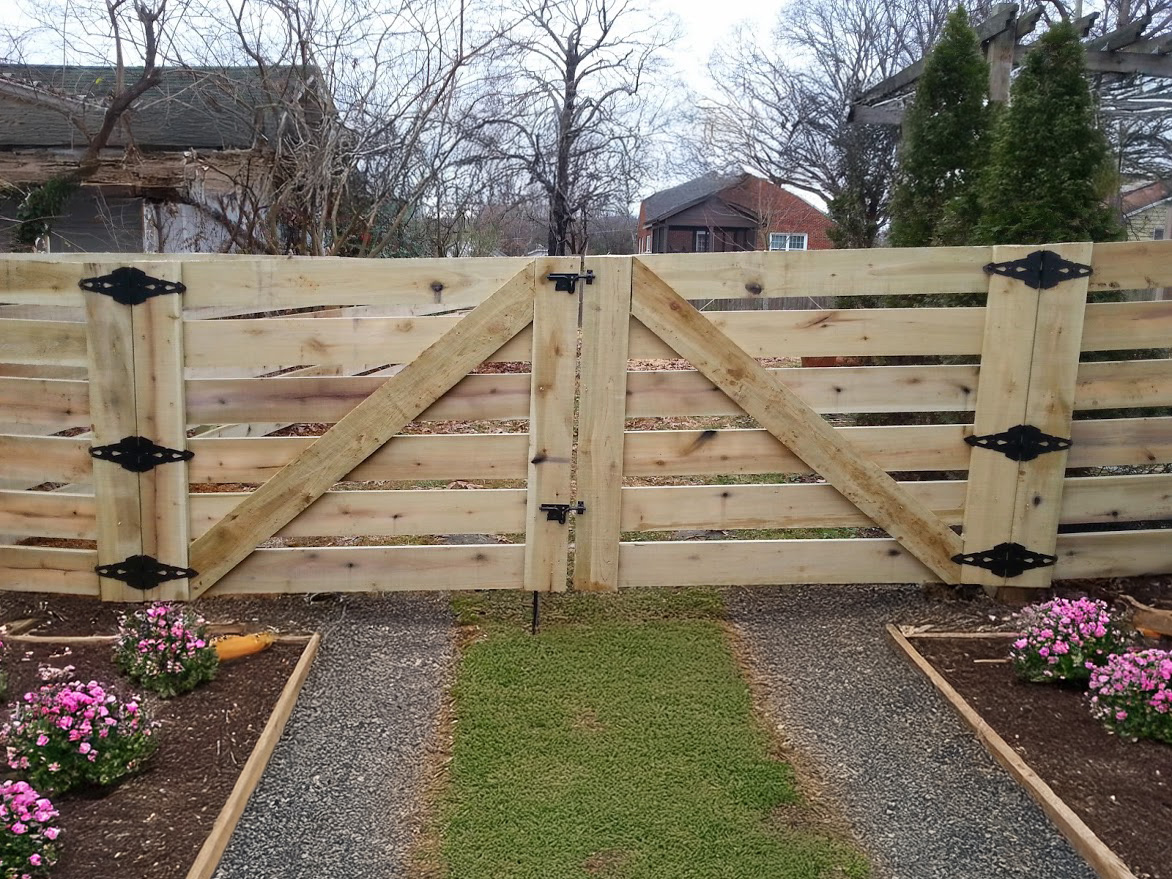
Out in the county means acreage toward Townsend and the foothills. Livestock, lines running through woods, long runs where cost per foot compounds. Woven wire, board fence and high-tensile, where corner and gate bracing determines whether it holds.
The Foothills Terrain Problem
Toward the Smokies the ground gets steeper and rockier. Slope means stepping or racking the fence to follow grade, commonly adding 10 to 25 percent to installed cost. Rock means holes that will not simply auger, and the shortcut of setting posts shallow is exactly how a fence leans within three seasons.
The rest of the county sits on the same expansive red clay as the region, which works posts out of plumb if they were not set for it. Ask whoever quotes your job what they do when they hit rock.
Before You Start
- Establish jurisdiction first. Maryville, Alcoa, or unincorporated county.
- Check for Historic District near downtown Maryville.
- Measure retaining walls into your height.
- Get HOA approval in writing.
- Call 811. On county acreage, private runs to barns and wells are common and never marked.
Frequently Asked Questions
Do I need a permit for a fence in Maryville, TN?
Generally not outside the Historic District. A fence over six feet is an accessory structure and must meet Article XIV setbacks.
How tall can a fence be in Maryville?
Six feet is the practical line. Above that it becomes an accessory structure with setbacks.
How tall in unincorporated Blount County?
Under ten feet is exempt from permit and setback, subject to vision clearance. Ten feet and above requires review and a permit.
Does a retaining wall count toward fence height?
Yes, for the portion above finished grade on the high side.
We Work Both Sides of the County
We have been building fence in Blount County since 1973. Call (865) 988-9935 or request a free quote.
Maryville · Alcoa · Permit rules by jurisdiction
Summarized from the City of Maryville Land Development Regulations and Blount County Zoning Regulations, current as of 2026. Confirm with the relevant office before construction. Not legal advice.