Why Dogs Love a Fenced Yard: Choosing a Dog-Friendly Fence
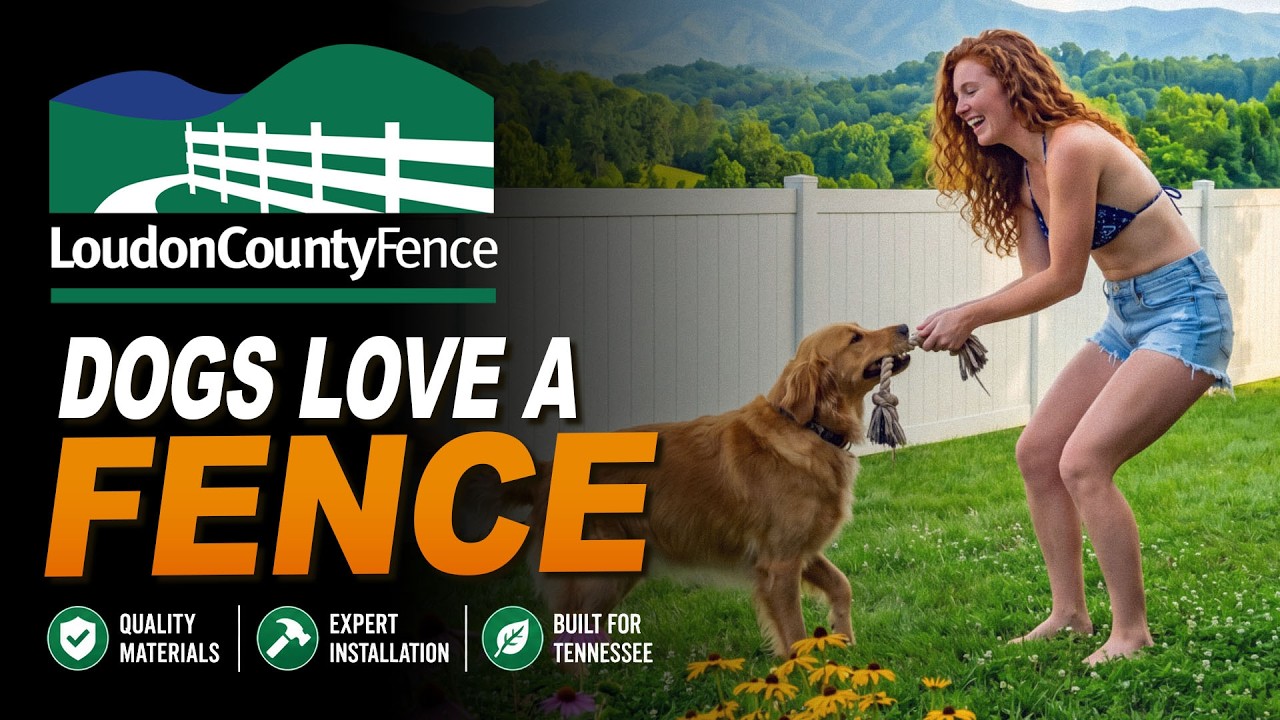
A fenced yard is the difference between a dog on a leash and a dog with a life. The right dog fence comes down to three things your dog will test: how high it is, whether anything at the bottom can be dug under, and whether there is a foothold to climb.
Match the Height to the Dog
A four-foot fence holds most small and medium breeds. A determined athletic dog — a shepherd, a husky, a lab with something to chase — needs six feet, and some jumpers need six feet with no horizontal rail on their side to push off. Be honest about your dog when you plan the height. Adding a foot later costs more than building it right the first time.
Diggers Get Solved at the Bottom
Most escapes are not over the top, they are underneath. On sloped and uneven ground a poorly built fence leaves gaps at the base big enough for a dog to work at. The fixes are straightforward: rack the fence so it follows the grade instead of stepping over it, add a bottom rail or a treated kickboard, or bury wire or a concrete mow strip along the line. We plan for this before we build, not after your dog shows you the weak spot.
Climbers Need a Fence With No Ladder
Chain link diamonds are a ladder to some dogs. Horizontal rails on the inside are a ladder to almost all of them. If you have a climber, put the rails on the outside, use a solid privacy board with nothing to grip, or use ornamental aluminum with vertical pickets and tight spacing.
What We Build for Dog Owners in East Tennessee
- Wood privacy fence — stops the barking that comes from seeing every passing dog, and gives full containment.
- Black chain link — the most affordable full enclosure. Black coating makes it visually recede against a tree line.
- Aluminum ornamental — vertical pickets, no footholds, and it keeps your view.
- Kennel runs — a dedicated, secure run for working dogs or for times when the whole yard is not appropriate.
Do Not Forget the Gate
The gate is where containment fails. Use a self-closing hinge and a latch your dog cannot nose open, keep the gap under the gate small, and put the latch high enough that a visiting child cannot casually open it. It is the cheapest part of the fence to get right and the most common part to get wrong.
Frequently Asked Questions
How tall should a fence be for a dog?
Four feet contains most small and medium dogs. Athletic breeds such as shepherds, huskies and labs generally need six feet, and dedicated jumpers need six feet with no horizontal rail on the inside to push off.
What is the best fence to keep a dog from digging out?
Eliminate the gap at the ground. Racking the fence to follow the grade, adding a bottom rail or treated kickboard, or burying wire or a concrete mow strip along the line will all stop a digger. Stepped fences on sloped ground are the most common source of dig-out gaps.
Is chain link a good fence for dogs?
Chain link is the most affordable way to fully enclose a yard for dogs and works well for most of them. Its drawback is that the diamond mesh gives a determined climber a foothold, so a climbing dog is better served by a solid privacy fence or aluminum with vertical pickets.
Who installs dog fences in Knoxville and East Tennessee?
Loudon County Fence installs privacy fence, chain link, aluminum ornamental and dedicated kennel runs for dog owners throughout Knoxville and East Tennessee. Call (865) 988-9935 for a free on-site estimate.
Get a Free On-Site Estimate
Loudon County Fence has been building fences in East Tennessee since 1973. We are veteran-owned, Google Guaranteed, and hold a Tennessee Unlimited Contractor License #54371.
Call (865) 988-9935, stop by our yard at 5482 Hwy 321 N, Lenoir City, TN 37771, or request a free estimate online. We serve Loudon, Knox, Blount, Roane, Anderson, Monroe, Morgan, Sevier, Rhea and Meigs counties.