Can a Chain-Link Fence Be Repaired? Knoxville Guide
Yes, most chain-link fences can be repaired. Chain link is a system of standard parts: steel fabric, a top rail, line posts, terminal posts, and the fittings that hold them together. When one part fails, that part can usually be swapped without tearing out the whole run. The cases where replacement makes more sense are narrower than most people expect, and they usually come down to widespread rust, failed posts along much of the line, or fabric that no longer exists in the size you have.
This guide walks through how a chain-link fence is built, what tends to break around Knoxville, and how we decide between a repair and a new fence. If you already know you need help, our fence repair service in Knoxville covers chain link along with wood, vinyl, and farm fence.
How a chain-link fence is put together
Knowing the parts makes it much easier to describe the problem and judge whether a fix is simple.
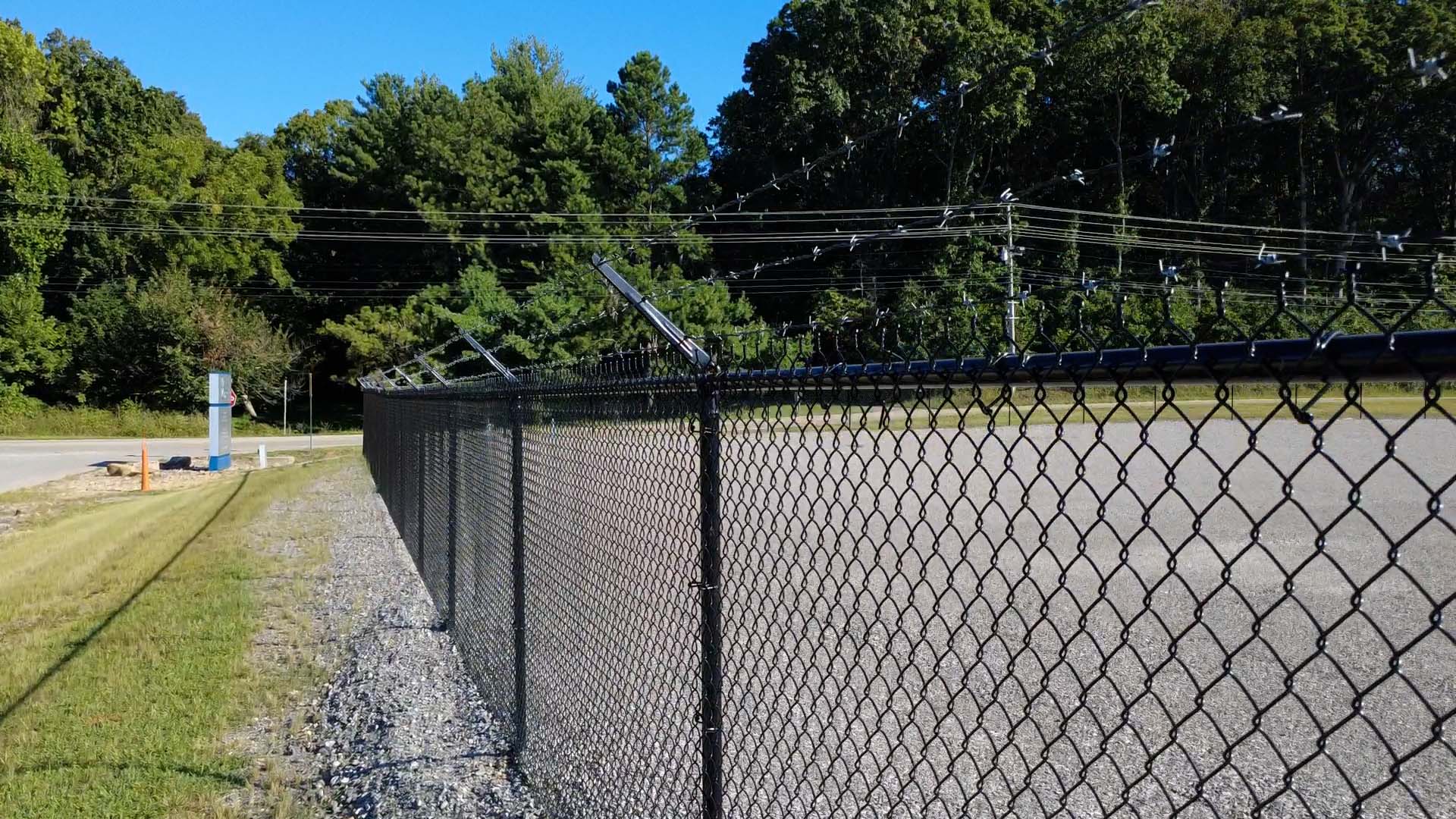
- Fabric (mesh). The woven steel diamonds. It is sold by wire gauge, mesh size, and height. A lower gauge number means thicker wire, so 9 gauge is heavier than 11 gauge, which is heavier than 11.5 gauge. Common mesh openings are around 2 inches. The top and bottom edges, called selvage, are either knuckled (bent over, no sharp points) or twisted (sharp ends, used where security matters more).
- Top rail. The horizontal pipe along the top that keeps the fabric from sagging between posts. Sections join with a swaged (tapered) end or a rail sleeve.
- Line posts. The intermediate posts along the run. The fabric is tied to them, but they do not carry the fabric's tension.
- Terminal posts. End, corner, and gate posts. They are larger and set deeper because they hold all the tension the fabric is stretched to.
- Tension bars and tension bands. A flat bar is threaded vertically through the end of the fabric, and bands clamp that bar to the terminal post. A typical 6-foot fence uses about five bands per terminal post; corners use double, because fabric pulls from two directions.
- Tie wires. Short wire ties that fasten the fabric to the line posts and top rail. Manufacturer installation guides commonly call for roughly one tie every 12 inches on line posts and every 24 inches on the top rail.
- Bottom tension wire. A heavy single strand stretched along the bottom between terminal posts. Not every residential fence has one, but it is the main thing that keeps the bottom of the fabric from being pushed out or lifted.
The industry standards behind these parts are published by ASTM. ASTM F567 is the installation practice for chain-link fence. ASTM F1043 sets strength and coating requirements for the steel framework, and caps chain-link line post spacing at 10 feet. ASTM F1083 covers galvanized steel pipe for fence structures, ASTM A392 covers galvanized fabric, and ASTM F668 covers polymer-coated (vinyl-coated) fabric. You do not need to read them, but a contractor should be working to them.
Common chain-link failures we see in Knoxville
Bent or crushed top rail
A common problem after storms. A limb drops across the fence, the top rail folds, and the fabric below it bows. If the posts are still plumb and the fabric is not torn, this is usually a straightforward repair: cut out the bent rail, slide in new sections, re-tie the fabric. Our guide to storm-damaged fence insurance claims in Knoxville covers documenting the damage before anything is moved.
Fabric pulled loose or pushed out at the bottom
Dogs digging, kids crawling, or something hitting the bottom of the fence can peel the fabric away. Fences without a bottom tension wire are much more prone to this. The fix is often re-stretching and re-tying the fabric and adding a tension wire. If the bottom few rows are torn, a section can be spliced in.
Sagging fabric
Sag almost always traces back to the ends of the run, not the middle. A terminal post that has leaned, a broken or slipped tension band, or a loose bolt lets the whole run relax. Re-tightening bands and re-stretching the fabric fixes many cases. If the terminal post itself has moved in the ground, it has to be reset or replaced before the fabric will stay tight.
Rusted or missing tie wires
Ties are the lightest part of the fence and often the first to rust through. When they go, the fabric flaps and pulls away from the posts. New ties are a simple fix, but widespread tie failure is a signal to check the rest of the steel.
Gates that drag or will not latch
A dragging gate is usually a gate post problem, not a gate problem. The post leans toward the opening under the gate's weight, or the hinges have slipped down the post. Re-adjusting hinges can buy time, but if the post is moving in its footing, the post needs to be reset. A gate frame that has racked out of square may need replacing.
Faded or cracked vinyl-coated fabric
Black and green vinyl-coated chain link fades with years of sun. Fading alone is cosmetic. Cracked or peeling coating that exposes bare wire is different, because the steel underneath will start to rust at those spots.
What can usually be repaired
- Bent, cracked, or crushed top rail sections
- Broken, slipped, or missing tension bands, tension bars, rail end fittings, and post caps
- Rusted or missing tie wires
- Fabric that has come loose, sagged, or been pushed out, as long as the wire itself is sound
- A torn or cut section of fabric, by splicing in a new piece
- A single leaning or broken post, by resetting or replacing it
- Gate hinges, latches, and a gate post that has shifted
- Adding a bottom tension wire to a fence that never had one
When replacement makes more sense
We will tell you plainly when patching is throwing good money after bad. Replacement is usually the better call when:
- Rust is structural, not surface. Galvanized steel can show surface staining for years. When the rail or post walls are rusting through, or fabric wire snaps when you flex it, the fence is near the end of its life.
- Many posts are failing at once. One leaning post is a repair. A run where most of the posts are loose or heaving usually means the original footings were too shallow or too small for the soil, and fixing them one at a time costs close to a new fence.
- Matching parts are not available. Older fences sometimes used odd heights, pipe sizes, or mesh that is hard to source. A patch that does not match can look worse than the damage.
- You want something different anyway. If the fence no longer does its job, such as a 4-foot fence when you now need 6 feet for a dog, putting repair money into it may not make sense.
Matching existing fabric when splicing in a section
A chain-link splice is one of the cleaner repairs in fencing when the new fabric matches the old. Fabric is joined by unwinding a single wire from the end of one roll and weaving it corkscrew-fashion through the end diamonds of both pieces, then tying off the knuckles at the top and bottom. Done right, the seam is hard to spot.
For it to look and hold right, the new fabric has to match on four points:
- Gauge. Splicing 11.5-gauge fabric into a 9-gauge fence leaves a visibly thinner, weaker panel.
- Mesh size. A 2-inch diamond will not weave cleanly into a 2-1/4-inch diamond.
- Height and selvage. The new piece has to be the same height, with the same knuckled or twisted edges.
- Coating. Galvanized to galvanized, and vinyl-coated to vinyl-coated in the same color. New galvanized fabric will be shinier than weathered fabric for a while, which is normal and dulls over time.
We measure the wire, count the mesh, and check the framework pipe diameter before ordering. If you want to learn more about the materials we install new, see our Knoxville chain-link fencing page.
Why East Tennessee ground matters for post repairs
Most chain-link problems that keep coming back are post problems, and posts are a soil problem. A few local conditions shape how we reset them:
- Frost depth. Knox County's frost depth is 12 inches. Post footings need to extend well below that so freeze and thaw cycles do not jack them upward over the winter.
- Clay subsoil. East Tennessee subsoils commonly run 35 to 60 percent clay. Clay holds water, swells when wet, shrinks when dry, and can let a lightly set post loosen and lean over time. Terminal and gate posts in clay need a properly sized concrete footing and good drainage at the top of the concrete.
- Shallow bedrock. Parts of Knox County sit on soils like the Montevallo series, where bedrock can be just 7 to 20 inches down. When a post hole hits rock, getting proper depth can mean drilling into the rock or adjusting the layout rather than just setting the post short and hoping.
- Utilities. Any repair that involves digging a new post hole requires a call to Tennessee 811 at least three working days before digging. That applies to homeowners and contractors alike.
If a post has leaned more than once, it usually was not set deep or wide enough for the soil it is in. Resetting it the same way will produce the same result.
Storm season and chain-link damage
In East Tennessee, tornado activity tends to peak in April and damaging wind events peak in June. Chain link handles wind better than solid fencing because air passes through the mesh, so the usual storm damage is not blow-over but impact: falling limbs, whole trees, and debris. That typically means bent top rail, crushed fabric, and occasionally a snapped or uprooted post.
One exception: chain link fitted with privacy slats or windscreen catches wind like a solid fence. ASTM F1043 notes that adding windscreen or inserts calls for stronger framework, closer post spacing, or added bracing. If slatted chain link keeps leaning after storms, that is likely the reason.
After a storm, photograph the damage before anything is moved, keep the fence closed off from pets and kids if fabric is torn or sharp ends are exposed, and do not try to pull a tree off a fence that is under tension. For more answers to common questions, see our fence answers page.
What to have ready when you call
A few details make a repair conversation much faster:
- Fence height, and whether it has a top rail, a bottom tension wire, or both
- Galvanized or vinyl-coated, and the color if coated
- Photos of the damaged area plus one wide shot of the full run
- Whether the problem is at an end, corner, or gate post, or in the middle of a run
Get an honest repair assessment
Loudon County Fence has been building and repairing fences in Knoxville, Knox County, and East Tennessee since 1973. We are veteran-owned, based in Lenoir City, and hold Tennessee Unlimited Contractor License #54371. If your chain-link fence can be repaired, we will tell you. If it should be replaced, we will tell you that too, and why.
Request a free fence quote or call (865) 988-9935.